― When did you start doing wild pond keeping yourself?
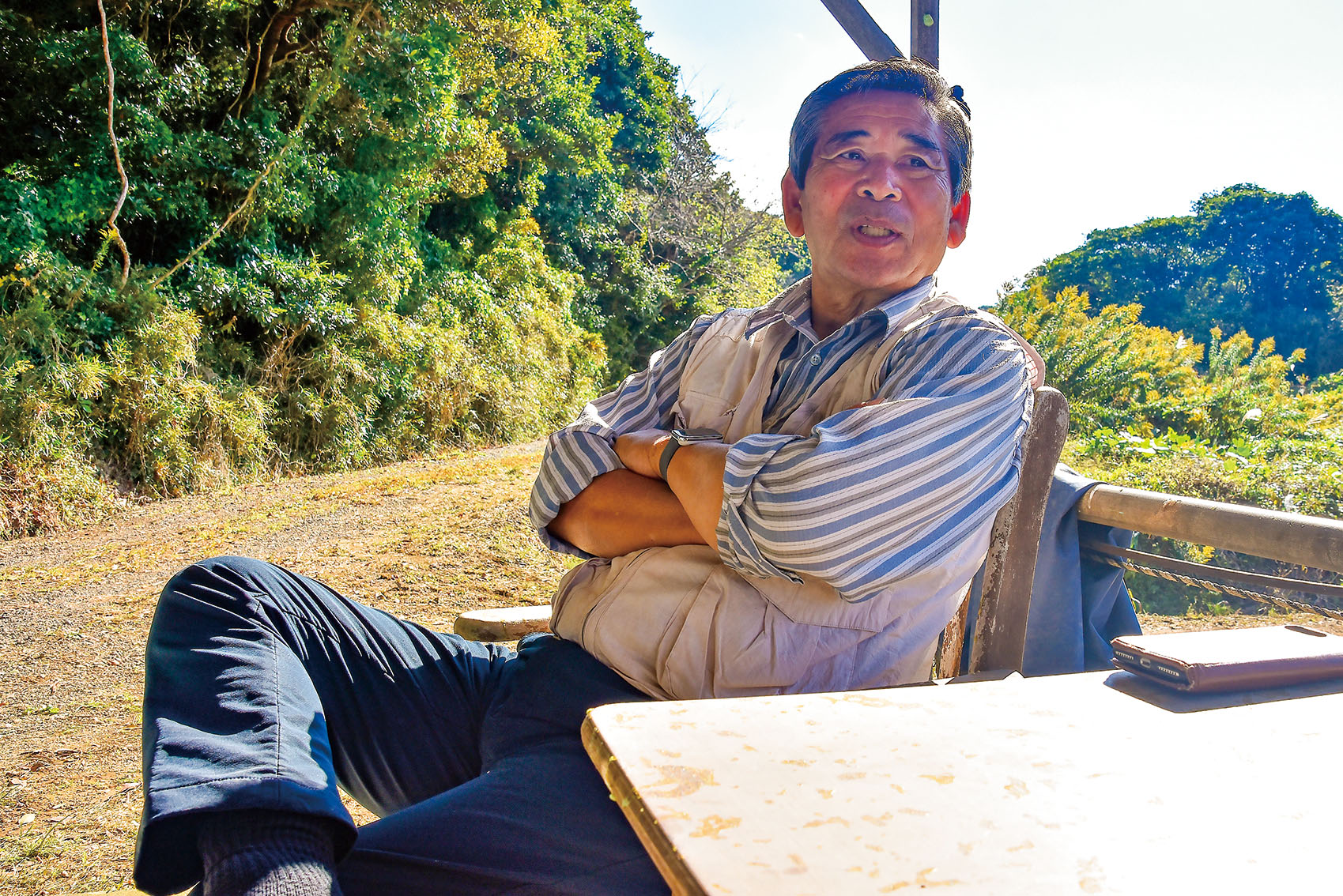
Kanashima: About 15 years ago, I borrowed a wild pond a classmate was using. That was the first time, not at the current location but a bit away. The oldest pond at the current site was made 12 years ago. Then 10 years ago, 7 years ago—I’ve been adding a pond every two or three years.
This land belongs to one landlord. The original rice paddy was too large, so we filled in the middle, splitting it into two for fry and for older fish, and made the filled part a path for trucks to pass. The basic agreement for wild ponds is to return them to their original state. If we hauled away the dug-up soil, it would be a huge hassle, so we used that soil to make the path. Even our seniors say if you’re going to build one, you want it as big as possible, but then vehicles can’t get through. I made it so I can drive all the way around the ponds to make maintenance and harvesting easier.
― How many wild ponds do you have currently?
Kanashima: Six in total. I lease three to Mr. Gonjiro from Kisarazu, and I use two myself.
― What made you decide to build your own wild ponds in the first place?
Kanashima: If you board your koi with a dealer, it costs tens of thousands of yen per fish. If you board 10 fish, you’re spending hundreds of thousands every year. Coincidentally, our company handles heavy machinery, and someone I was indebted to happened to have a wild pond in Choshi that I saw. So I thought, why not dig my own? It was also when I turned 60 and stepped down as company president. Otherwise, doing it while working would have been difficult.
― Are there many hobbyists who own wild ponds?
Kanashima: Choshi has quite a few yatsuda (rice paddies in valleys), so combined, there were probably over 30 ponds.
― Having done wild pond keeping for years, what do you find appealing and rewarding about it?
Kanashima: Probably seeing the koi get fat. Even when they reach around 70cm and growth slows, they still bulk up. Seeing that change firsthand is enjoyable.
But basically, entrusting them to a professional is much easier (laughs). Mowing grass around the pond and maintenance are labor-intensive. You need to mow at least three times a year. And every year, you have to compact the pond edges with machinery.
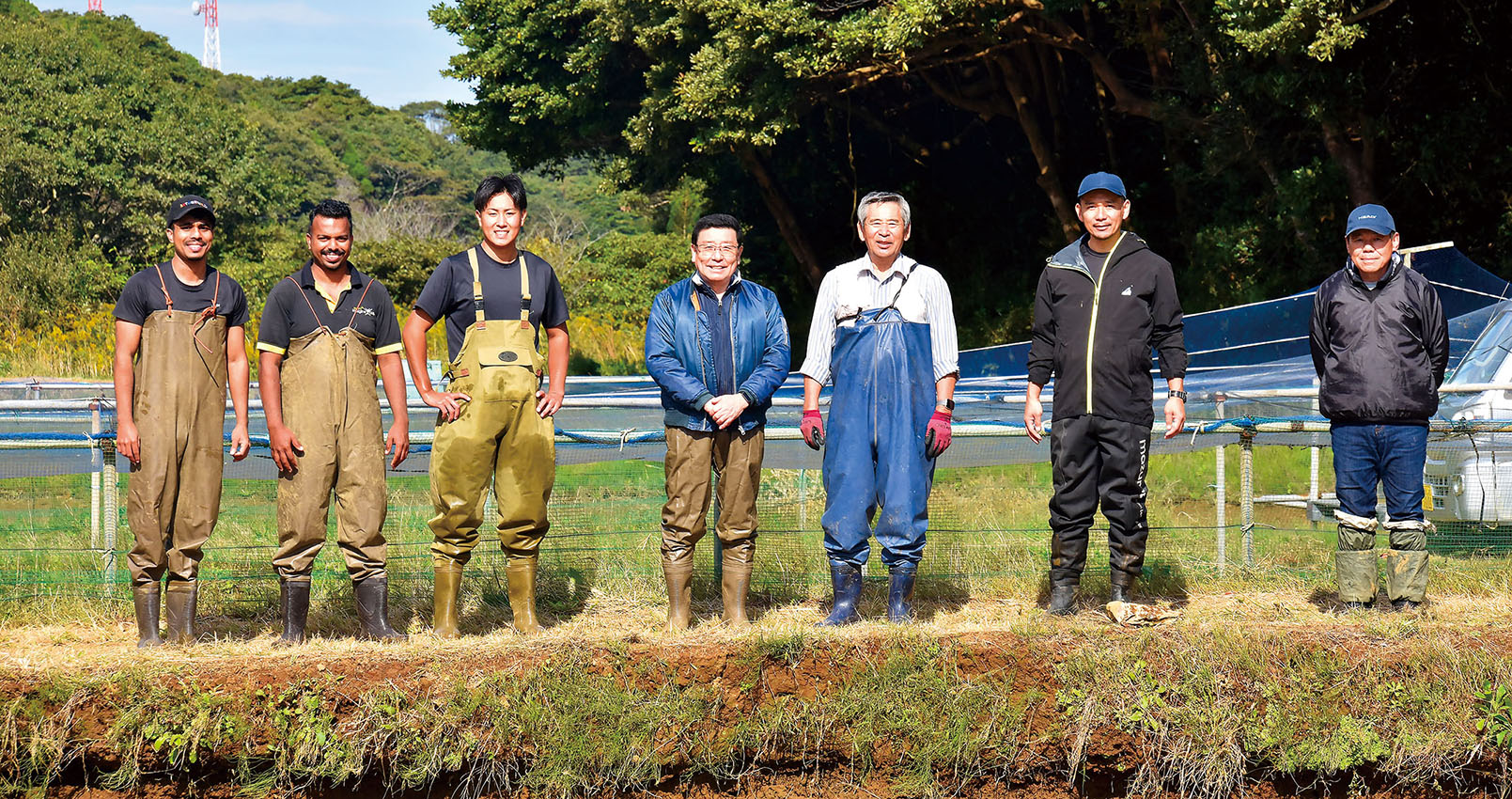
― Watching the harvest today, everyone seemed to be having so much fun. Does that make the hard work worth it?
Kanashima: Inviting friends over for a harvest like this and making new friends through koi is wonderful. You meet so many different people. If the schedule aligns, I even invite students from the nearby Chiba Institute of Science to join the harvest.
Also, by maintaining these wild ponds, we’ve been able to host firefly-watching events at the company. In those ways, I’m glad I started doing this.
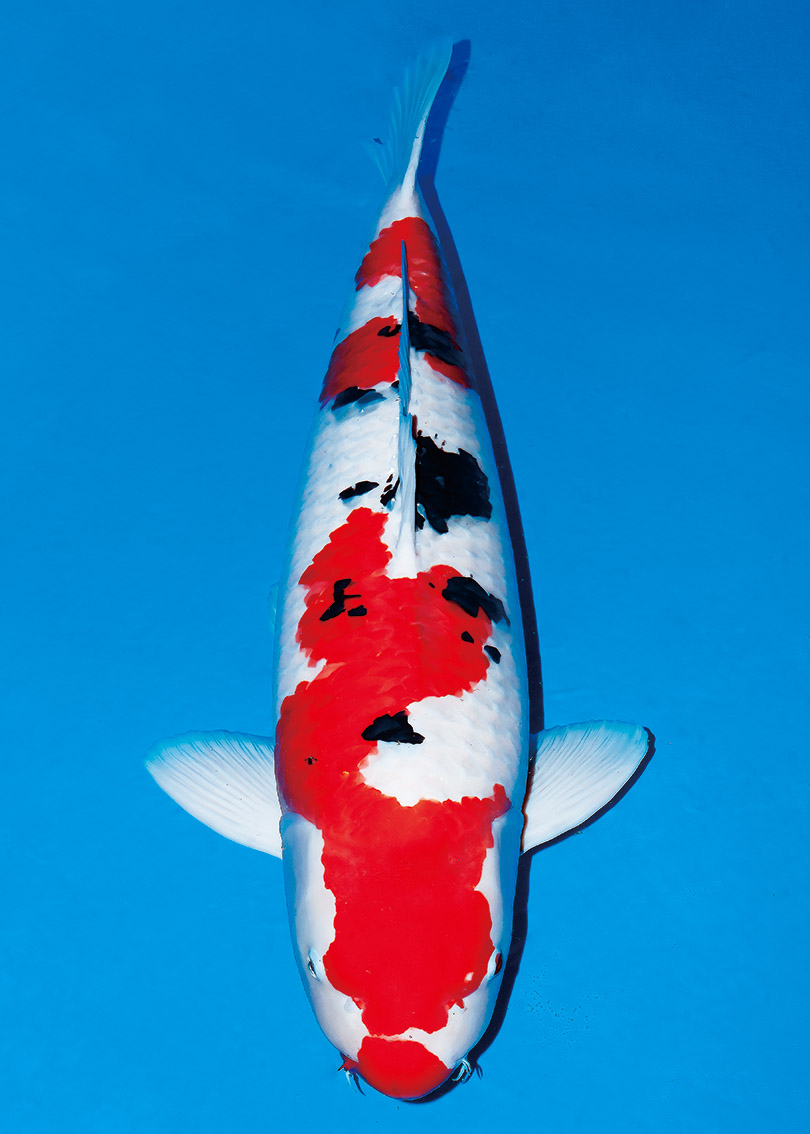
Over 80bu Male Champion / Taisho Sanshoku
Breeder/ Handler : Marumi Koi Farm
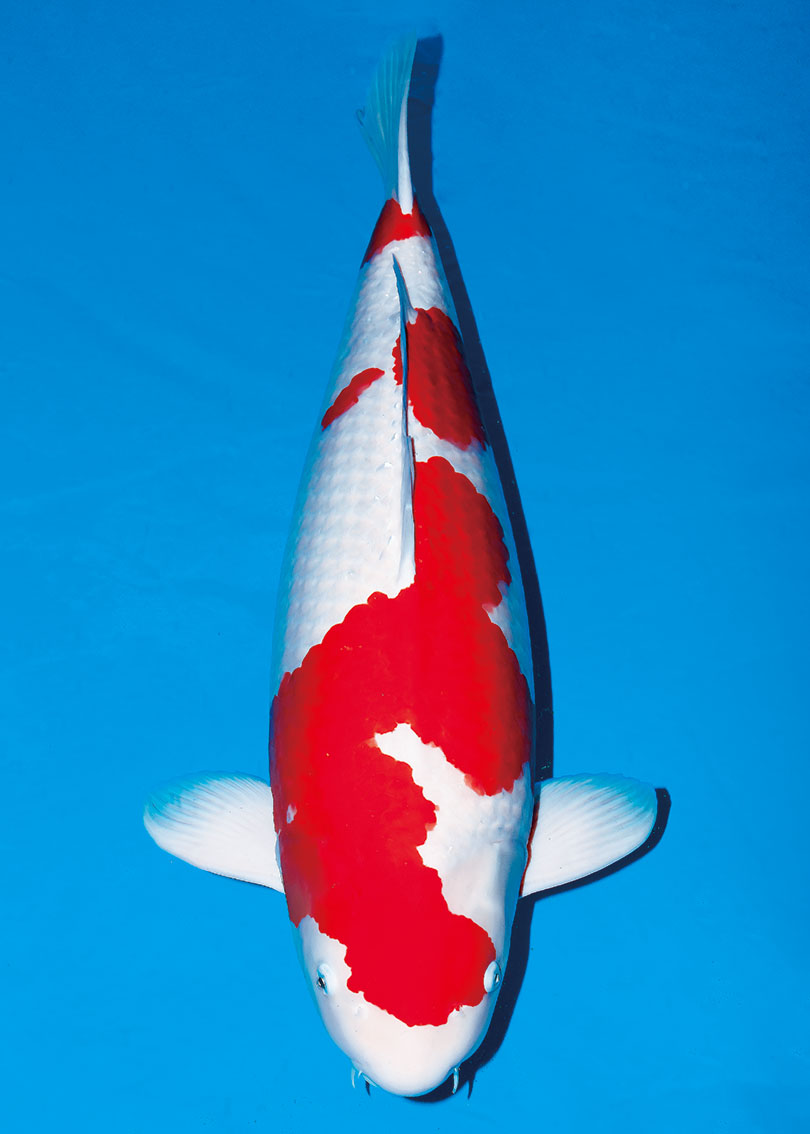
80bu Male Champion / Kohaku
Breeder : Sakai Fish Farm / Handler : Marumi Koi Farm
Participating in Shows Within Personal Transport Limits
Also Conducting Promotion Activities Through Koi Donations to University
― What age of koi do you usually buy?
Kanashima: Mostly Tosai or two-year-olds. It’s more fun to raise them from a small size, and since koi prices are skyrocketing, good koi older than 3 years are out of my reach. It’s become a situation where young people can’t buy them easily. I donate koi that turn out to be male or those whose color has faded to the Chiba Institute of Science.
However, I had one Kohaku that won a category award in the Kanto region. It was a male, but its body was so magnificent that everyone thought it was a female. I’m even using it as a parent fish now. I don’t put males in the wild ponds anymore, but I used to have a dedicated male pond, and they grew quite large there.
― Even male koi growing that big is thanks to having wild ponds, right?
Kanashima: Now, for shows, I basically only participate where I can transport the koi I raised myself, so mainly the Chiba Prefectural Show. Last year’s show, I received two class prizes. I tell my sons I’ll quit both keeping and showing when I can no longer carry the fish.
― Do you enter your self-bred koi in shows?
Kanashima: No, not really. But this year, I’m thinking maybe I’ll enter one. About ten years ago, a koi I bought and raised myself got second place when I entered it in the Chiba Prefectural Show, but it died before I could aim for first. You really need over 80cm to compete for the top.
― You mentioned donating koi to the Chiba Institute of Science?
Kanashima: Yes. I’ve been donating koi to the ponds on the university campus for about 16 years. I was honored to receive a certificate of appreciation and a commemorative gift the year before last. I want to continue doing this as long as I am healthy.
Also, there is a seafood market called “Wasse 21.” Before COVID, I used to do free fry distributions there every year and set up tanks to show off large koi to help increase the number of hobbyists. But we haven’t been able to do that since the pandemic.
― You’ve engaged in various activities to increase koi hobbyists locally in Choshi.
Kanashima: In the past, my hobby was shooting 8mm film. At the time, there was a “Choshi 8mm Club,” and I even made a work called “Falling in Love with Koi.”
Also, when my son got married, we placed a tank at the wedding venue and displayed Shusui. I really wanted to put bowls with fry on each round table. The manager gave OK, but our company’s managing director said if someone got drunk and poured sake in, killing the fish would be bad luck. So, we settled for a large tank in the welcome area displaying Shusui (laughs).
― Bringing koi even to a wedding venue. That’s amazing (laughs).
Kanashima: I feel I’ve promoted koi in various ways like that, but expanding the hobbyist base is quite difficult. I’m also reaching the age where I need to think about winding down. While considering the cleanup, I want to enjoy koi as long as my body allows.
― We look forward to your continued efforts to promote koi in Choshi. Thank you very much for today.