Acquiring ” Incomplete Koi” at Affordable Prices
When Sumi Appears, the Balance Becomes Excellent
― At the Kansai Regional koi show, your handled koi consistently rank high every year.
Tsujikawa: The 2022 Grand Champion (①) was bought as a two-year-old and kept in a mud pond for a year. As a three-year-old, its sumi was sparse but promising. I told customers, “You shouldn’t buy something like this,” and didn’t sell it (laughs). When it was around 75cm put in the pond and came out at 80cm, a Niigata dealer wanted to buy it, but I refused (laughs). I brought it back and sold it to Mr. Yasuyuki Imanishi soon after. After winning Grand Champion in Kansai, it went to China and won Grand Champion at their koi show (24th All China Nishikigoi Show / Dec 2024). I heard koi worth tens of millions of yen were entered, so winning among those was quite something (laughs). The 2024 Over 85bu Grand Champion (②), that’s also an excellent Sanshoku. I bought about 16 koi in total during Sakai’s jumbo tosai sale; this was one of them. It was raised by them for a year before I brought it back.
― For the 46th All Japan, you handled the Junior Koi Grand Champion (③).
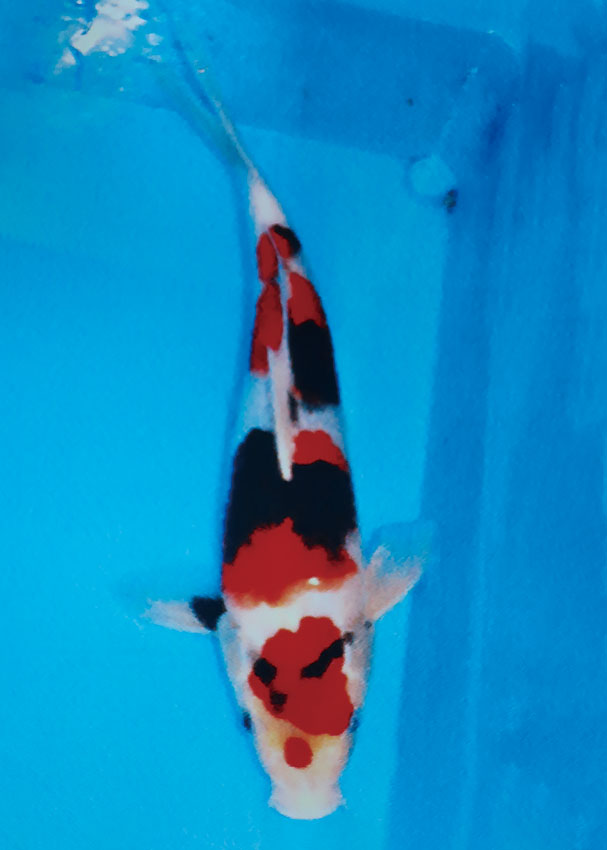
Tsujikawa: That was one of twenty bought at 10,000 yen each when it had no sumi. We kept it, and it won the Junior Koi Grand Champion at the previous year’s All Kansai too.
― Was it two years old at the All Japan?
Tsujikawa: Yes. Two years old, 25cm.
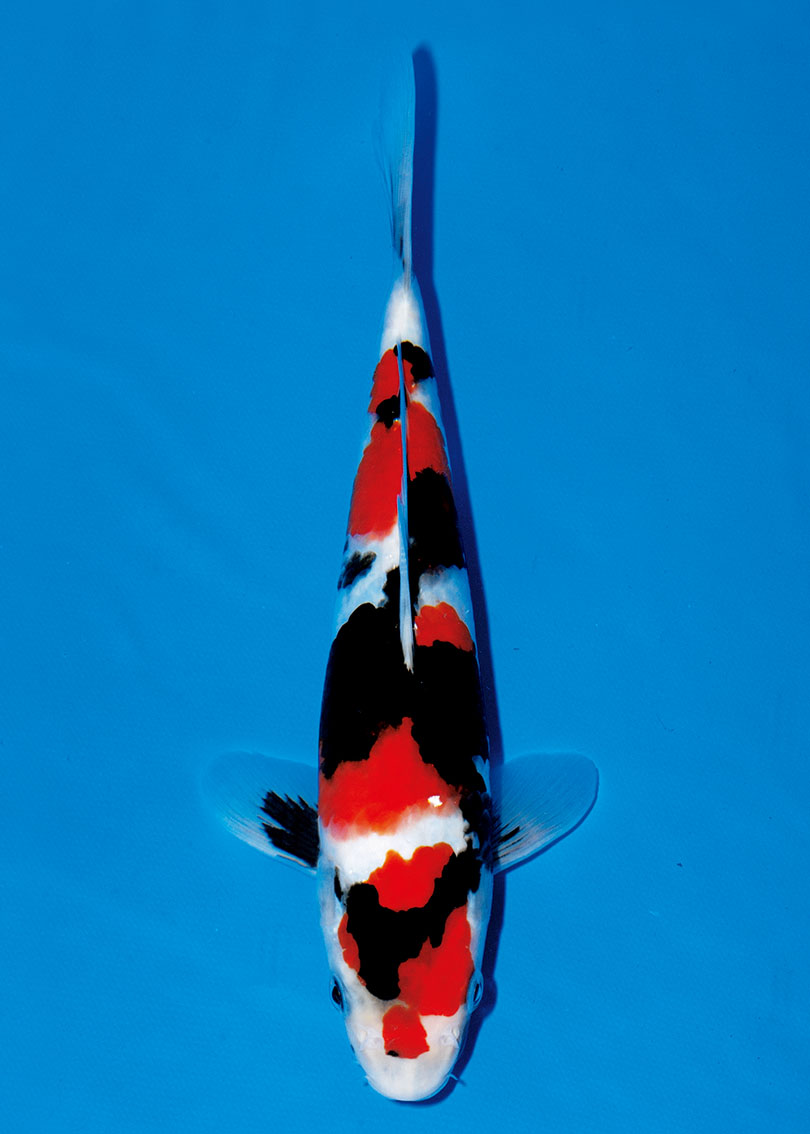
Breeder: Sakai Fish Farm Handler: Senshu Nishikigoi 2 years old, 25cm
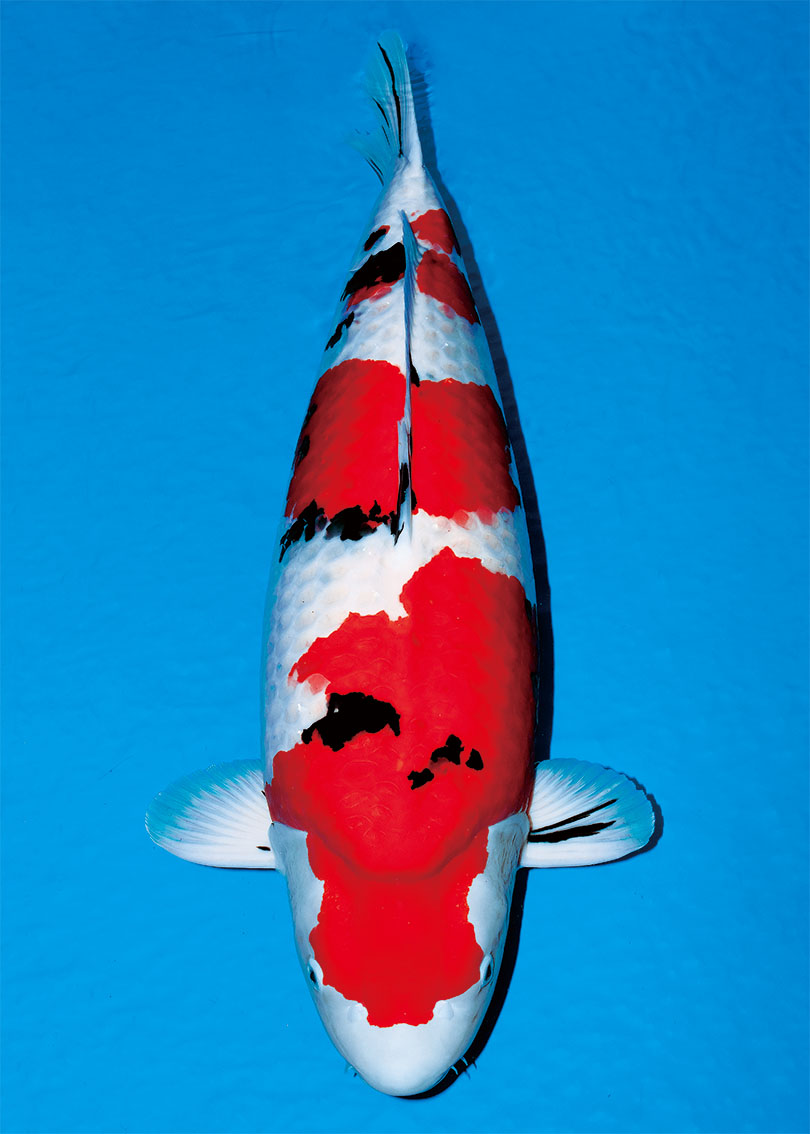
Breeder: Sakai Fish Farm Handler: Senshu Nishikigoi 10 years old, 87cm
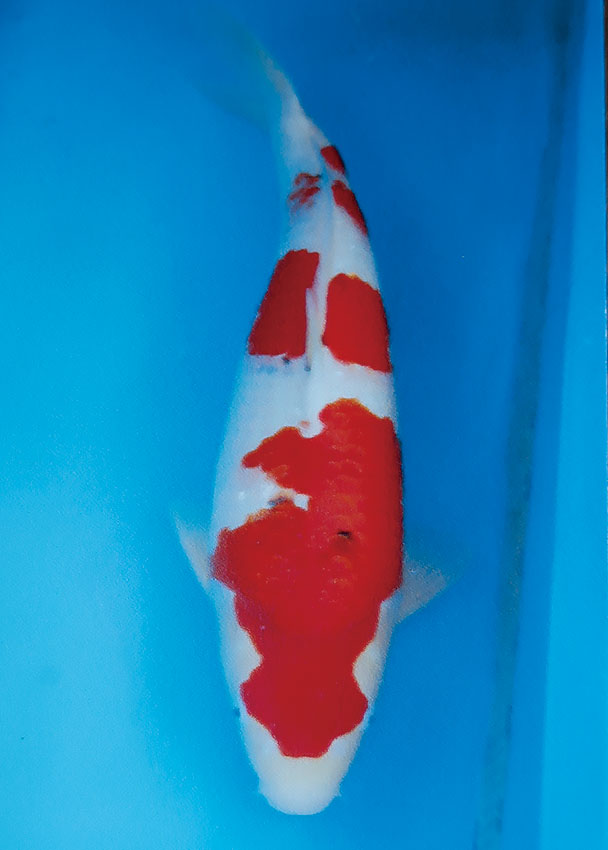
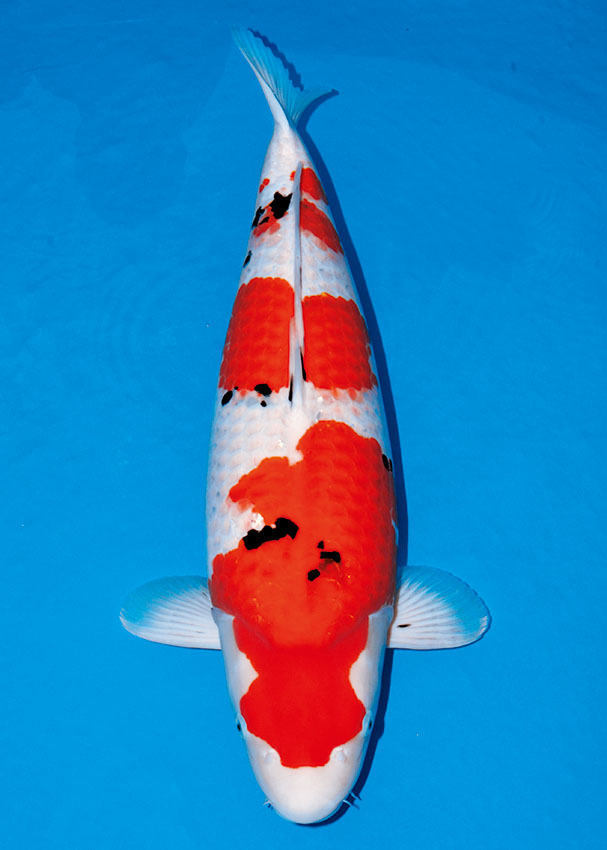
Mature Koi Champion 3 years old, 68cm
― As a tosai, it still had little sumi. The distinctive facial sumi seen at the All Japan win wasn’t there either.
Tsujikawa: Exactly, that’s why it was cheap.
― Do you mainly source tosai or two-year-olds?
Tsujikawa: Yes. I rarely buy large ones. If you buy a large one and it fails, it’s tough. In the old Sakai auctions, they would put the upcoming auction fish in a pool for viewing, so I’d target specific ones.
― Your eye must have been very sharp since your hobbyist days.
Tsujikawa: No, I’m just looking for koi based on the premise that they will grow large. If they don’t grow, the customers all get angry. If I hit the mark with a Tosai, I think that’s great, and the customer will be happy too.
― So your style is not to buy finished koi, but to buy koi that look like they will become good in the future?
Tsujikawa: Yes, Tategoi.
― For example, the 2022 Superior Koi Grand Champion (④) had almost no sumi as a two-year-old. What made you choose this koi?
Tsujikawa: For me, Sanshoku with overlapping sumi have no appeal. I thought one must choose koi where sumi appears on the shiroji. Almost all the ones I choose are like that—koi with ample, clear white ground.
― Looking at photos of koi you’ve bought, many seem to have almost no sumi yet, or patterns that seem somewhat incomplete.
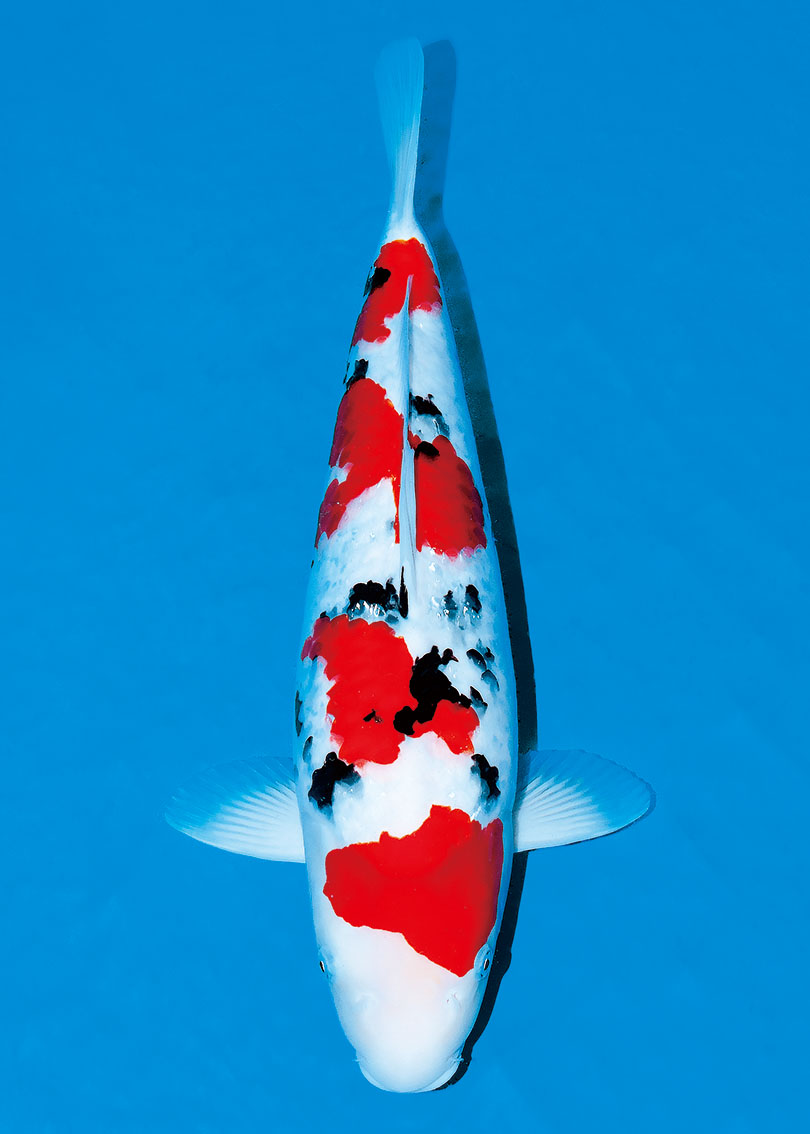
Breeder: Sakai Koi Co., Ltd Handler: Senshu Nishikigoi 2 years old, 50cm
Tsujikawa: Nobody else buys them, but I’m fine with that. To buy cheaply, you look for ones that seem slightly lacking. I once bought a two-year-old Sakai koi with no sumi; by four years old, it fetched a very good price.
― Even when there’s no sumi, is there any basis for predicting it will appear?
Tsujikawa: It’s more like intuition or a feeling… I think the koi might develop sumi, maybe I should take a big gamble. I’m always up for a big gamble, so it’s fun. Both I and the customers can enjoy it.
― The sumi on the 2022 Grand Champion Sanshoku looks sparse as a two-year-old. What about that?
Tsujikawa: It depends on the sumi quality. If it comes out densely like sesame seeds, that’s no good. But if the sumi quality is good, I think it will come.
― So you buy anticipating it will consolidate and intensify?
Tsujikawa: Yes. Also, I buy based on the koi’s shape, its form. I buy because I feel its overall appearance is good. A 50cm koi should have the proper form for its size. I buy based on that sense.
― You seem to source a lot of Sanshoku.
Tsujikawa: That’s because without sumi, Sanshoku are the cheapest to buy. A slightly incomplete koi develops sumi, becomes a Sanshoku, and achieves a perfect balance. I envision that in my mind when buying. I think if sumi appears on a Kohaku with a good pattern, it might ruin it.
― I see.
“Price Surge is on a Different Scale,” Struggling with Costs
Providing Koi for Enjoyment with Less Burden
― Do you have wild ponds in Osaka?
Tsujikawa: In Niigata. I currently use four ponds: two in Shiotani, one in Kizu, and one in Mushigame. The one in Mushigame is large. I used to have some in Wakayama, but now they’re all in Niigata. Locals manage them, and I send Kyorin breeder feed from here.
― How often do you go to Niigata yearly?
Tsujikawa: About three times in spring, twice in autumn for harvesting, and I also make rounds for auctions, etc. In the past, even if I bought a lot, they sold. But now, with higher prices, things have changed somewhat.
― Do you hold sales events at the shop?
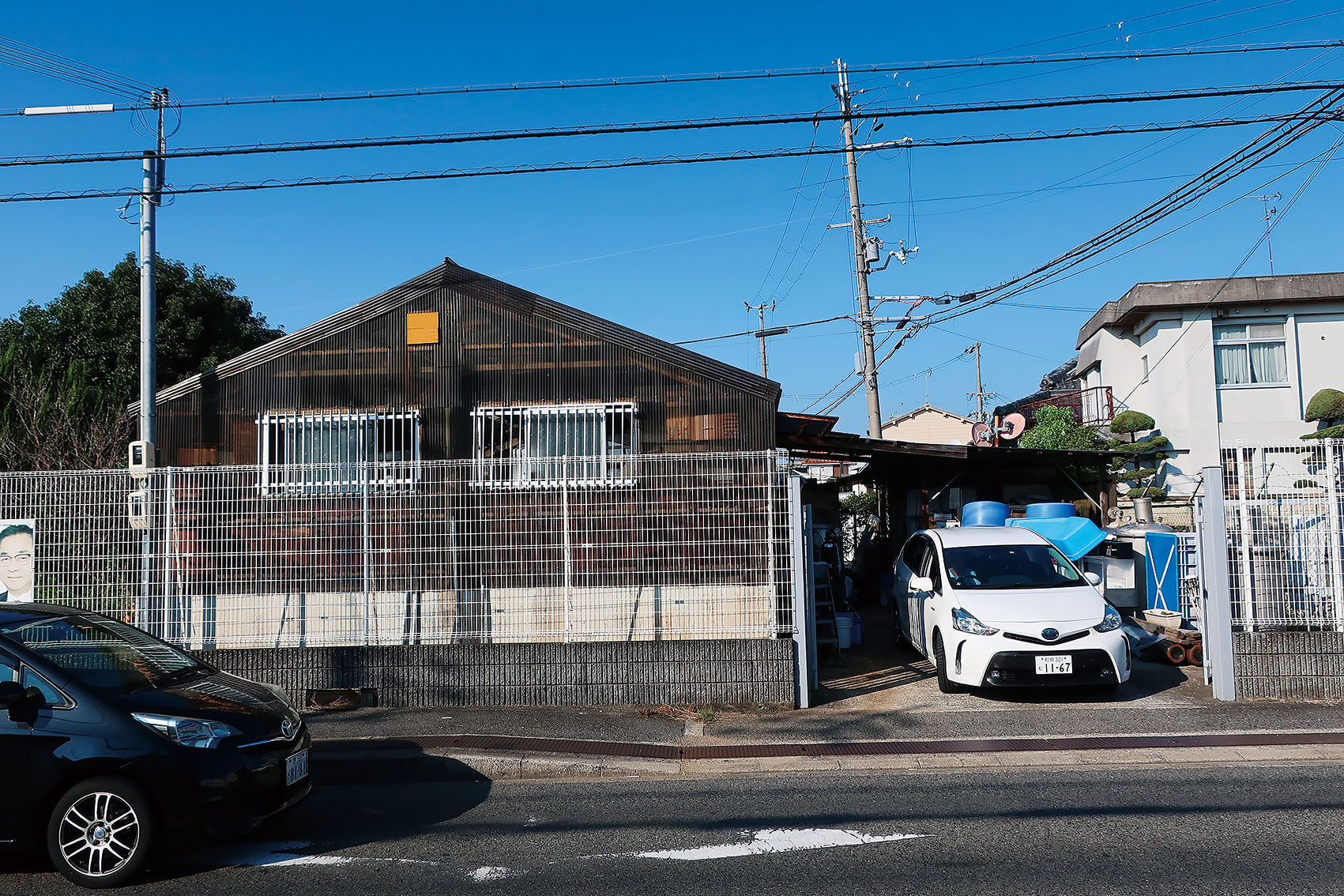
Tsujikawa: No. We don’t have parking, and it would be chaotic if many people came.
― So how do you sell to customers?
Tsujikawa: Mainly by having them see koi when harvested from ponds, or showing them the jumbo tosai I buy in spring. Now, I’m focusing on buying affordable tosai. That puts less burden on customers. Currently, koi prices have simply risen too much. It’s on a different scale; I can’t keep up.
― Price increases are one thing, and the recent summer heatwaves are a major issue too. Especially in hot Osaka, it must be challenging.
Tsujikawa: You have to go where there’s ample water. Tap water just won’t do anymore…
― Is the water here from the tap? Summer water temperatures must be hard to lower.
Tsujikawa: Right. So, I’m scaling down, maybe even leaving one pond empty in summer is okay. Also, I’m 73 now. I’m thinking of reducing procurement a bit and planning to wind down by 75. I figure it’s over when I can no longer drive to Niigata.
― Please don’t say such sad things… Besides sales, you also handle repair and maintenance work, right?
Tsujikawa: Not right here, but a bit farther away. For competitions, I only participate in All Kansai (Kansai Region) now. We must think about boosting Kansai; otherwise, it won’t help regional development.
― With your consistent top placements at the high-level All Kansai show, many hobbyists believe Senshu Nishikigoi is an indispensable dealer. As a dealer rooted in Osaka, we look forward to your continued hard work.