Retailer Interview Kiryu Nishikigoi Center, Gunma Prefecture Mr. Takashi Hojo
Many Hobbies, But the Core is “Single-Minded Devotion to the Way of Koi”
He Loves Jumbo, Individualistic Koi
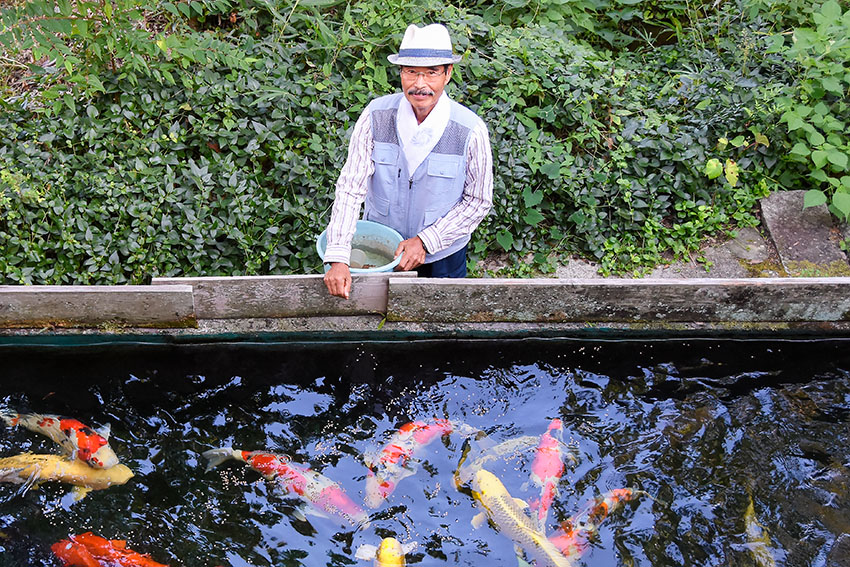
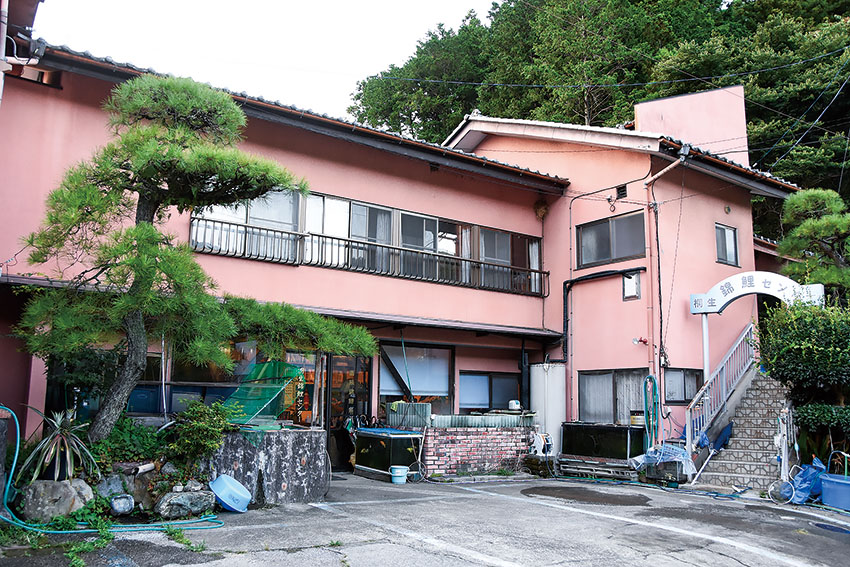
The Kiryu Nishikigoi Center is run by Mr. Takashi Hojo, a man acknowledged by himself and others as a “person of many hobbies.” His boundless curiosity, evident not only in Nishikigoi but also in gardening, music, art collecting, etc., can be seen throughout the store. Once, driven by a longing for “1-meter” koi, he ran all over the country, and while still carrying that passion, he now flexibly responds to the needs of beginners. Whenever you visit this store, a calm time flows, reflecting Mr. Hojo’s personality.
The Store Started from Disposing of His Own Koi
After 43 Years in Business, It’s Gunma’s Oldest Established Shop
― How many years has it been since Kiryu Nishikigoi Center was founded?
Hojo: I started in 1982 at the age of 27. As of 2025, it has been 43 years.
― Were you originally a fan of koi?
Hojo: It was a hobby. I am the second son, so I didn’t plan on inheriting this house or living here, but there was a pond my grandfather built where Magoi were swimming. There weren’t any colored ones.
― So that was your first encounter with koi.
Hojo: That was when I was still a child. I don’t know how my grandfather obtained them, but in the period shortly after the war in the Showa era when food was scarce, women who had trouble producing breast milk would use koi…
― Ah, I’ve heard stories about how it was said to be good for pregnant women to drink koi blood and things like that.
Hojo: In short, it means koi are nutritious. So, perhaps as a nutritive tonic, my grandfather seemed to be giving black koi to people who were unwell. I don’t think it was for ornamental purposes. I knew about the koi being there since I was small.
I first saw colored Nishikigoi when I was probably in the lower grades of elementary school. The neighbors were in the business of buying and selling kimonos and obi, like an intermediary or broker in today’s terms, and they seemed quite well-off. They built a Japanese-style pond and kept Nishikigoi in it, which still exists today. Seeing that, I thought, “They’re beautiful, how nice.” So, when I was in the 4th or 5th grade, I wanted a pond and made a small one behind our house.
― You dug it yourself?
Hojo: My cousin lived next door, so I got him to help. I vaguely remember lining up concrete blocks. Since I was an amateur, I probably wasn’t very good at plastering, but I kept fish there.
― Were there shops selling Nishikigoi nearby at the time?
Hojo: There was a place called Tajima Fish Farm in Kiryu City. They sold Nishikigoi, goldfish, common carp, eels, etc. However, I couldn’t keep them very well in that pond. Once I became a junior high school student, I got busy with club activities and such, so it didn’t last long. For high school, I went to Sano (Tochigi Prefecture), and there was a fish wholesaler called Sano Ornamental Fish, so I went to see koi there a few times.
I started seriously keeping them again probably when I was a university student. I stacked concrete blocks and built a pretty impressive pond. I was even a member of the ZNA for about two years. So, among my current customers, there are people I’ve known since that time.
― Were there many hobbyists in Kiryu as well?
Hojo: Even at the shows for the Kiryu branch of the ZNA Gunma Prefecture Chapter, as many koi were gathered as there are at today’s prefecture-level shows. I believe the Gunma Chapter had over 100 members. After graduating from university, I went to graduate school and kept koi in a “gourd pond” on the balcony of my apartment in Tokyo. Because I was in the ZNA, I developed an “eye” for fish and began to understand what made a good koi.