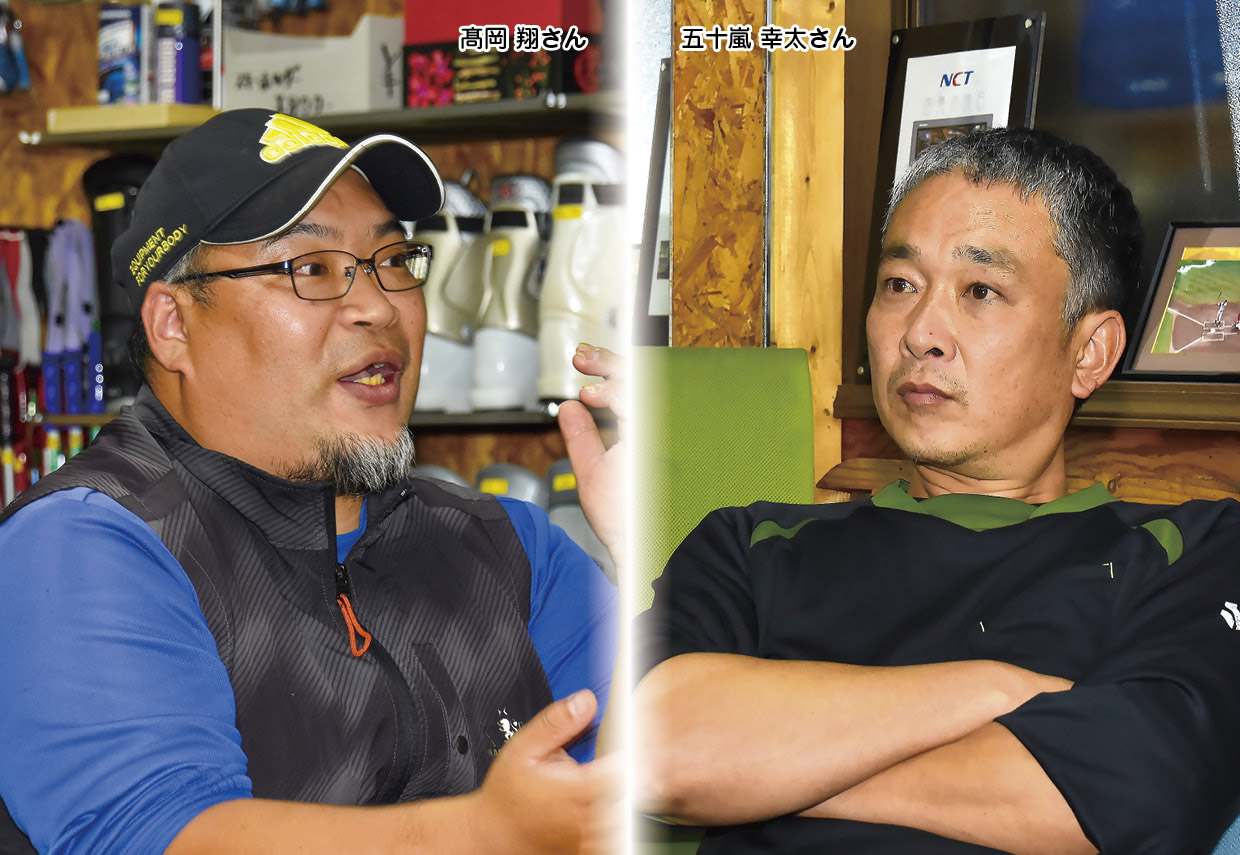
“I want people to feel the emotion of tategoi”
Providing a place to enjoy together with hobbyists
― Mr. Ikarashi’s Showa Sanshoku are now indispensable to the “Enjoying Showa Sanshoku Association.” How long have you been handling them, Mr. Takaoka?
Takaoka:It was about 15 years before I started holding the “Enjoying Showa Sanshoku Association.” I started receiving koi from Mr. Ikarashi. All the tosai I received, I brought back to Yokosuka. Once, when helping with the pond harvest of two-year-old koi, I received a koi that I asked him to raise in his wild pond. That was the first moment I truly experienced the “joy of tategoi” with my own koi.
However, the koi I received didn’t come up at the six-year harvest, perhaps due to a health issue…
― Wild ponds do carry such risks.
Takaoka:It’s unavoidable since they’re living creatures. But more than anything, the six years of discussing koi with Mr. Ikarashi, saying “maybe this, maybe that,” was irreplaceable. While looking at the precious koi of the seniors that did come up, the two of us would say, “Let’s choose a different type next time” (laughs).
― Because you had such experiences, you are where you are today.
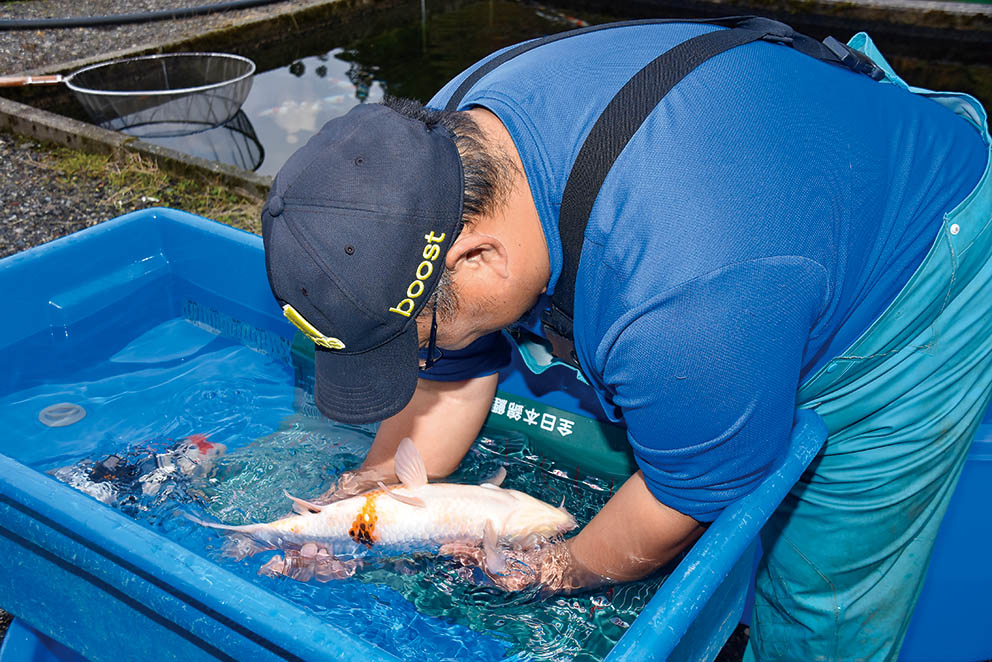
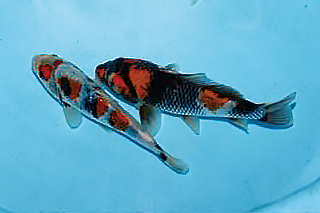
Takaoka:Back then, I was shown many koi over 15 or 20 years old. As I interpreted these changes in my own way, such as “the type where sumi appears early” and “the type where sumi appears over several years,” I encountered “Kakiemon” (Photo ②).
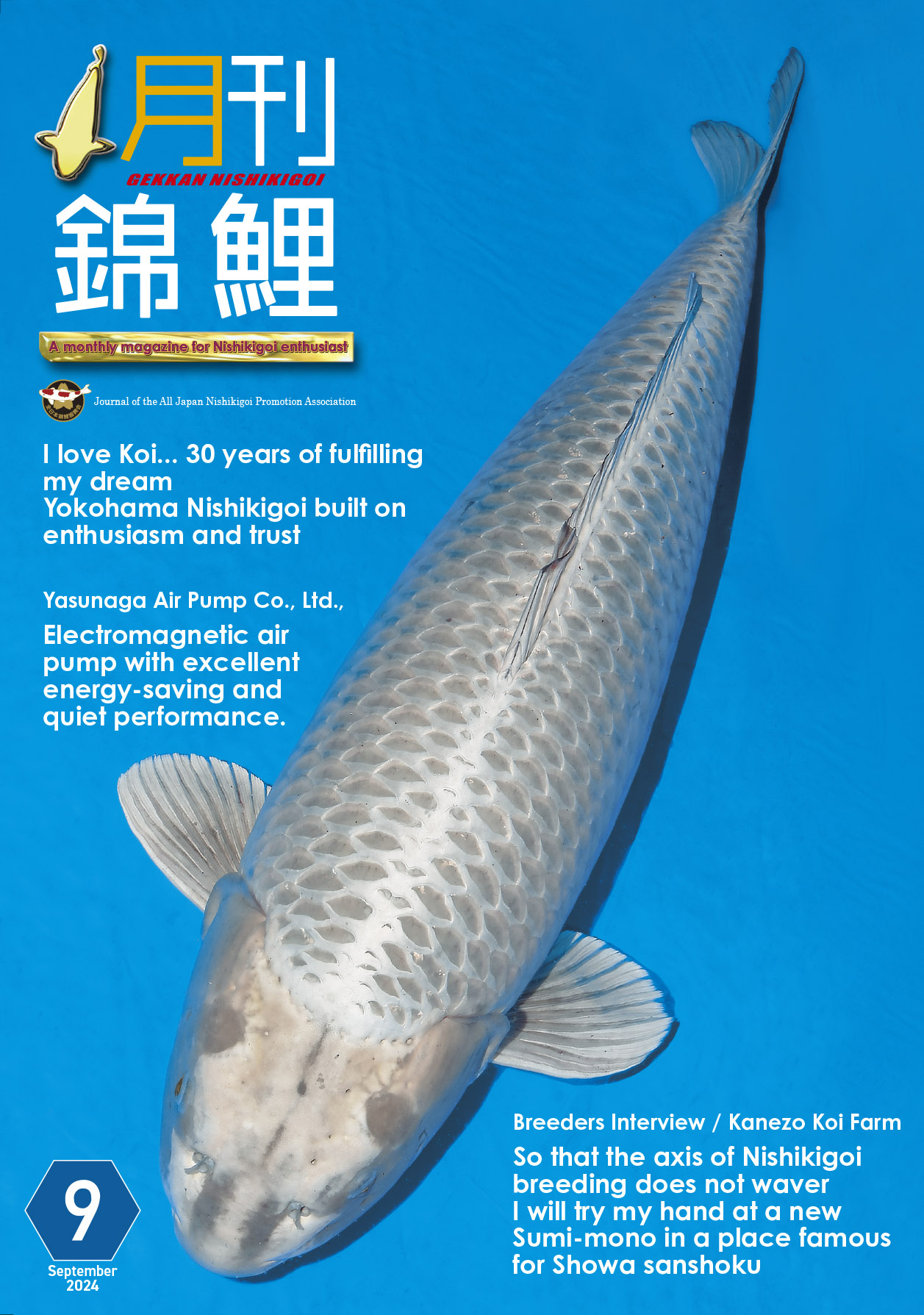
― That’s the Showa Sanshoku that graced the cover of this magazine’s September 2023 issue. It was a very unique koi.
Takaoka:Looking back, it was about 10 years ago, around November. I spotted this koi among many tosai. I immediately said to Mr. Ikarashi, “I love this koi. It’s the best. Please let me have it.” But he said, “The koi would be pitiful. It doesn’t want to go to Yokosuka,” and refused me (laughs). So I saw it again at the autumn harvest when it was two years old. I bowed to Mr. Ikarashi and finally managed to get it.
From tosai to two years old, the pattern naturally became well-balanced. From two to three years old, hi appeared on the peduncle, which it didn’t have before, starting around age four. I thought, “It will become one complete pattern as it grows,” so I didn’t worry about it. By the time it reached six years old, it had become fully red. Then, at seven, eight, and nine years old, I witnessed the sumi gradually emerging. That’s when I truly realized how enjoyable tategoi can be.
― That’s when you became hooked on the charm of tategoi.
Takaoka:I thought it was such a waste that no one knew about these so enjoyable and so beautiful Showa Sanshoku. So I asked Mr. Ikarashi, and from then on, I started formally purchasing from him.
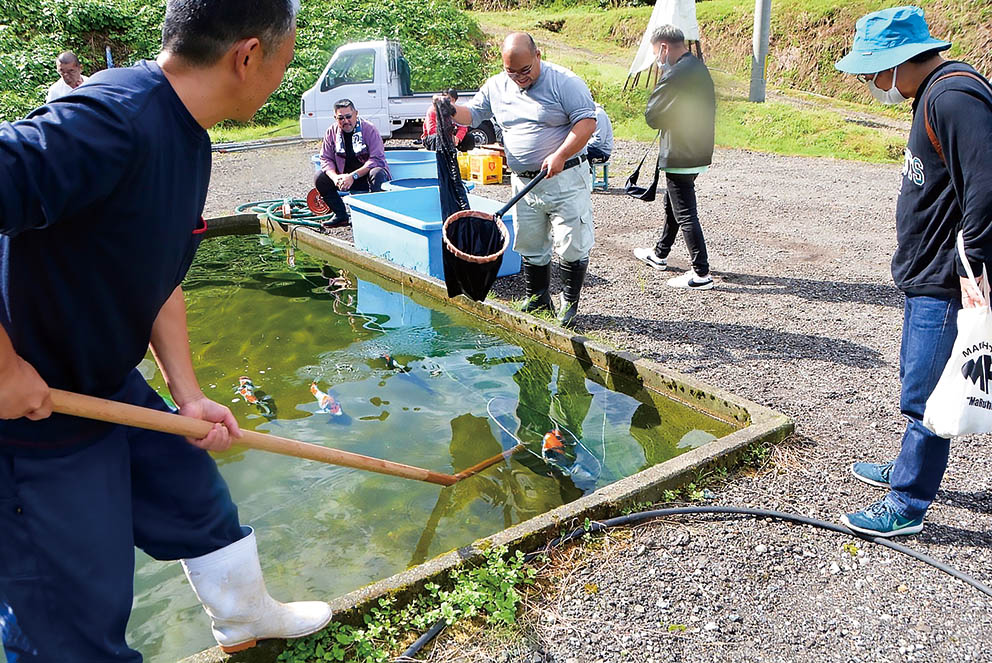
In the autumn, I showed the two-year-old koi to interested customers. They took them home for a year, and then I had them look at the koi when they came up the following year. Seeing everyone smile with joy, their faces turning back into those of young boys, I started thinking, “It would be nice if I could do some kind of event.”
― So the “Enjoying Showa Sanshoku Association” started from there?
Takaoka:I had been talking about such things with Mr. Ikarashi for a long time, but at the time, his wild ponds were full, so we couldn’t do it immediately. When the ponds became available, Mr. Ikarashi suggested, “It might be interesting to try something like that,” so I started it.
― Please tell us your points for selecting koi, Mr. Takaoka.
Takaoka:When selecting koi, I just try to look at many good koi. I observe the growth of the koi that Mr. Ikarashi told me “are no good” and try to select koi that resemble them.
While learning, “Even if the pattern is good, without quality, it won’t last” (laughs).
― You’re completely smitten with Showa (laughs).
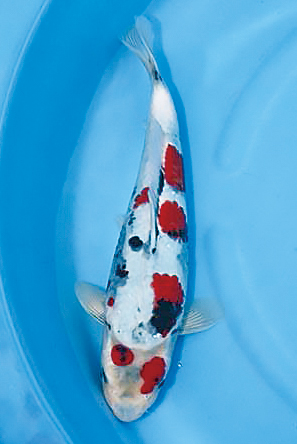
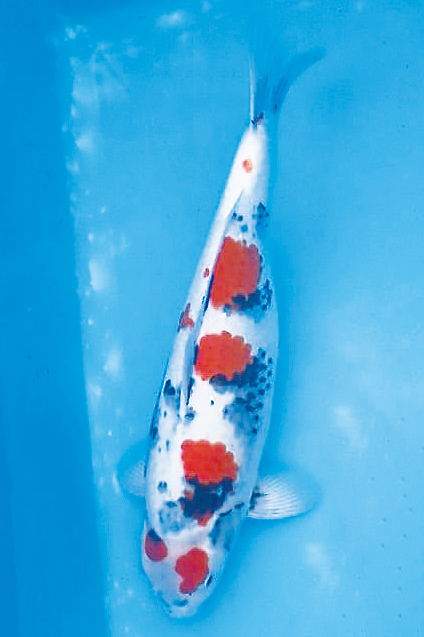
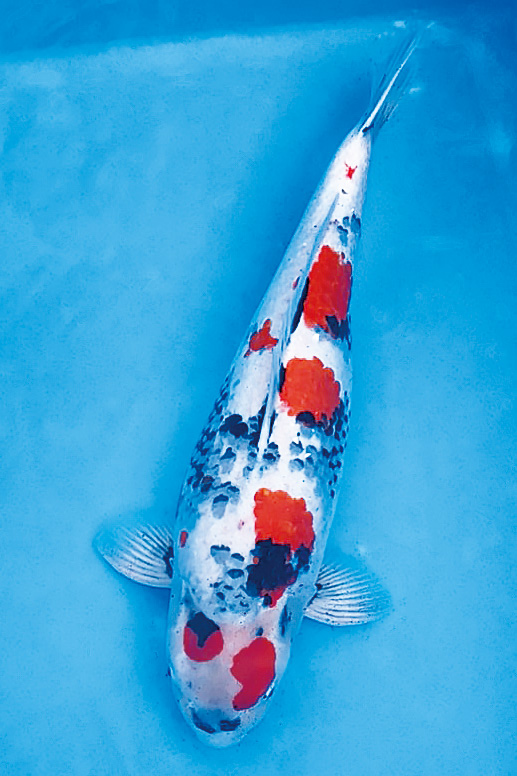
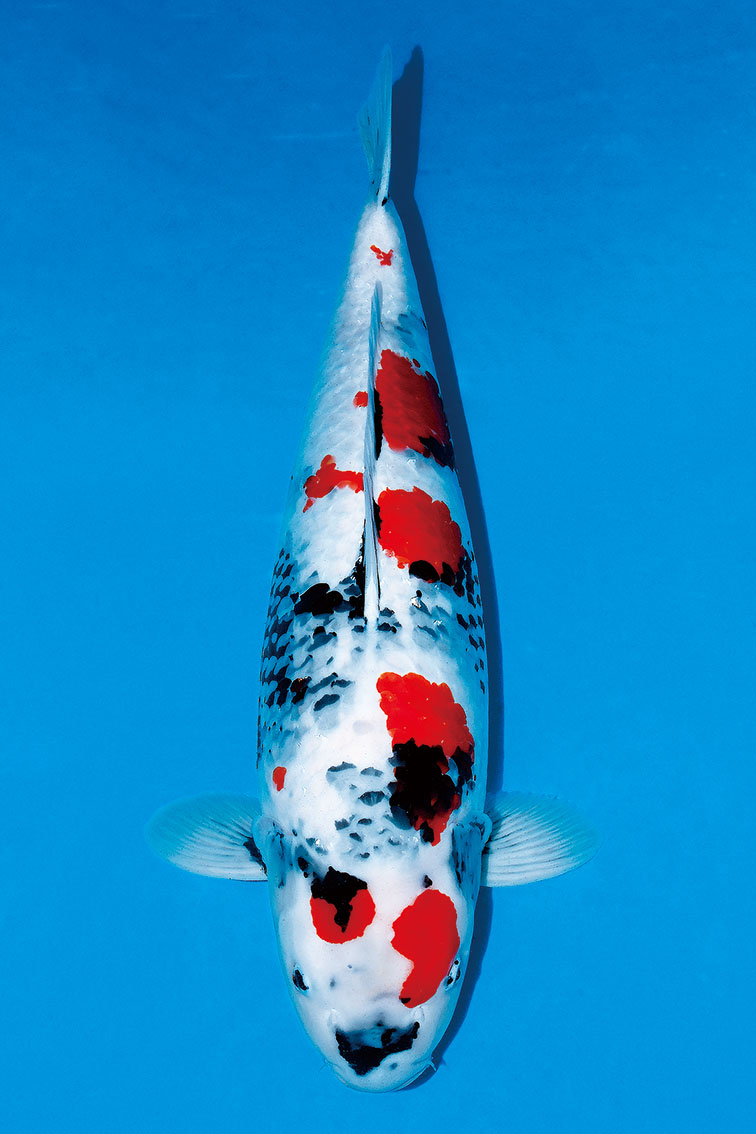
Takaoka:I pulled out old magazines and asked a senior, “Doesn’t this look like Dainichi’s ‘Sakura’ from back then?” The senior praised me for the first time, saying, “You have an ugly face, but your nishikigoi deviation score is high.” That gave me great confidence.
Because of all this, I truly love Showa Sanshoku. After all, I drive around in a light truck painted with a Showa Sanshoku pattern (laughs).
Ikarashi:Normal people wouldn’t think of doing that (laughs).
Takaoka:Other dealers often judge koi that come up from wild ponds in a show format, ranking them from best to worst. However, at the “Enjoying Showa Sanshoku Association,” I have customers look at the koi that have come up together, saying things like, “This part has improved.” I started this association with the desire for people to simply enjoy the koi, including the emotion of tategoi’s changes and growth, and the fun of it.
Of course, because koi are living creatures, not all of them will turn out well. But I think that if you use parent koi with a solid lineage, they will naturally last and remain.
― It must be special to see and enjoy the changes, texture, and finish of koi that have come up from wild ponds.
Takaoka:People often say lately, “If the pattern isn’t good, it’s no good,” “If it’s not female, it’s no good,” “If it won’t grow big, it’s no good.” But depending on the rearing environment, males can sometimes maintain their body shape better and finish more beautifully. So regardless of gender, I try to purchase koi that I think are good. However, I feel that more and more people think, “The pattern is bad, so it’s cheap.”
In the end, koi are honest creatures. Even if you try tricks, they will try to return to their original state. Often, people don’t understand, but I’m satisfied if I can provide a stimulus to those who have been purely enjoying koi for a long time and touch their hearts. After all, I’m a person who does this job because I love koi.
― Your passion for koi comes through strongly.
Takaoka:The koi handled by Mr. Ikarashi, as well as other seniors like Mr. Oyama, Mr. Masai, and Mr. Kachi, are truly beautiful. Their skin is pure white, with a texture like porcelain sprinkled with silver powder.
Ikarashi:Nowadays, people don’t say “the kiwa and sashi are good.” They only say “the pattern is good.” I think my direction is quite different from that. I believe there are not a few people who feel unsatisfied with the current koi industry. If those people could see us as a place with “weird koi,” I think that would be good.
Takaoka:Like, “It feels nostalgic somehow.” It’s about differentiation. Doing the same thing as everyone else isn’t interesting. While doing things that no one else does, I hope to have fun together with the customers. Because we can also learn together, like, “This koi will become like this.”
Ikarashi:There will always be a certain number of people who go against the current mainstream and trends. I don’t think they will ever disappear, so I target them… Probably that’s the case in any industry.
Ultimately, in business, it’s about whether the product you offer is something you would want if you were the customer. I feel that’s the most important thing.
Takaoka:Also, it would be sad if a wonderful traditional culture like nishikigoi declines due to the inculcation of misguided aesthetic sense. Precisely because beauty is an elusive “world of feeling,” I believe we must continue striving to ensure that truly beautiful things are judged correctly.
― I see. Finally, please say a few words about the 5th Enjoying Showa Sanshoku Association.
Takaoka:We are able to hold the 5th meeting this year. Thank you to everyone who always supports us. Again this time, please look forward to Showa Sanshoku sparkling with natural beauty under the sunlight.
― We look forward to the autumn pond harvest. We hope this association continues for 10, 20 times. Thank you.