Next, I would like to talk about the prevention and treatment of Dropsy.
First, when koi develop Dropsy, the most important thing is to perform water changes. To remove pathogens from the water, it is essential to thoroughly clean the filter and perform proper water changes.
One important point to note is that water changes should be carried out by draining the pond water first, rather than simply adding fresh water. Some people maintain water quality by continuously running well water or tap water into the pond, but this method does not effectively remove pathogens. It is essential to properly drain the water and then perform a full water change. Above all, the first step is to make every effort to reduce the number of pathogens in the pond.
However, if as much as 80% of the water is drained at once and replaced with fresh water, it can cause pH shock or sudden changes in water quality, which may instead lead to poor health or even death. As a recommended approach, it is better to drain about one-fifth of the water per day, or at most one-third, and gradually replace it over about three days. After that, adding salt is considered beneficial.
Another important point is to move the infected fish to a separate environment while performing water changes. Bacterial diseases, such as Dropsy and Ulcer Disease, can spread to other koi if they remain in the same environment. Even if the disease does not spread immediately, symptoms may develop later. As a result, just when one koi seems to have recovered, another may begin to show symptoms, making it difficult to resolve the situation. Therefore, it is important to isolate infected koi at an early stage.
I often hear hobbyists say, “I only have one pond, so it’s not possible.” However, I also have just one pond. Instead, I use a canvas pool. It is extremely convenient for use during treatment.
In my case, I have two pools with a diameter of 1.8 meters, and a water volume of about one ton is sufficient for treatment. The pool should first be filled with water, and as koi may jump when startled during treatment, it is important to secure a cover, such as a net, to prevent escape. Then add salt at about 0.5%. After transferring koi showing early symptoms into the pool, be sure to perform thorough water changes in the main pond to reduce pathogens there.
In fact, I once had a Kawarimono koi called “Koyo,” which I had raised to 85cm, and suddenly began to show raised scales. Although I immediately realised this was a serious problem, I was determined to cure it in the name of Japan Pet Design Co., Ltd. as a pharmaceutical company. After attempting various treatments, I was ultimately able to restore it to health, so I would like to briefly share that experience with you.
It started to lose condition around early autumn last year. At first, it stayed motionless at the bottom and showed signs of protruding eyes, and when I moved it into a tub, symptoms of Dropsy became apparent. I was concerned it might already be too late, but I moved it to the pool right away.
The water temperature was around 18°C. It is generally said that bacterial pathogens become active at temperatures between approximately 18°C and 24°C, and within this range, bacteria are highly active.
In the treatment pool, in addition to 0.5% salt, I added the prescribed amounts of Kanpara D and Green F Gold. Green F Gold contains two types of antibiotics—nitrofurazone and sulfamerazine sodium—while Kanpara D contains oxolinic acid.
Many of you are probably familiar with using Elbagin, which contains the antibiotic sodium nifurstyrenate. By using a combination of multiple antibiotics, their effectiveness against bacteria can be enhanced.
The pathogen responsible for dropsy is the bacterium Aeromonas, so it is essential to eliminate it effectively.
The most important aspect of treatment is to prevent the condition from progressing further and to bring the symptoms under control.
In addition, since the koi’s own strength is essential for a full recovery, feeding should be gradually resumed once it begins to stabilise.
If feeding is completely stopped for nearly a month, the koi will lose its strength, so it is important to monitor its condition and provide food accordingly.
The feed I used in this case was Medi Carp Max.
Medi Carp Max is a feed that enhances immunity and increases resistance to disease, so I began using it during the recovery stage. By the start of the new year, it had fully recovered and was able to swim normally after being returned to the pond. It is now healthy and active.
This may be a slight digression, but it is often said that diseases are more likely to appear when feeding begins in early spring. This is because winter can be regarded as a dormant period for bacteria. When water temperatures fall below 10°C, most bacteria and pathogens cease activity and enter a so-called dormant, “sleeping” state.
Pathogens cannot survive without a host, so when the host is koi, the environment preferred by koi also becomes favourable for the pathogens.
It is generally said that the optimal water temperature for keeping Nishikigoi is around 18–24°C; however, this is also true for pathogens, as this temperature range is when they are most active. Conversely, when the temperature falls outside this range, pathogen activity declines.
When the water is heated, the koi may appear to improve. However, this may simply reflect the pathogens becoming less active, making it seem as though the symptoms have subsided.
There tend to be fewer diseases in winter because, once water temperatures fall below 10°C, pathogens become inactive and symptoms are less likely to appear. However, this does not mean the pathogens have been eliminated—they remain dormant in the pond. As spring approaches and water temperatures rise to around 15°C, feeding begins. As temperatures continue to rise and full-scale feeding resumes, pathogen activity also increases.
If large amounts of feed are given at that time, it places stress on the koi and, as a result, makes them more prone to developing disease. This is why koi tend to become unwell more easily in early spring.
Therefore, before starting to feed in early spring, be sure to perform water changes and disinfection. In some cases, I recommend administering antibiotics to effectively reset the system before the spring season. This approach can greatly reduce the risk of disease outbreaks during early spring.
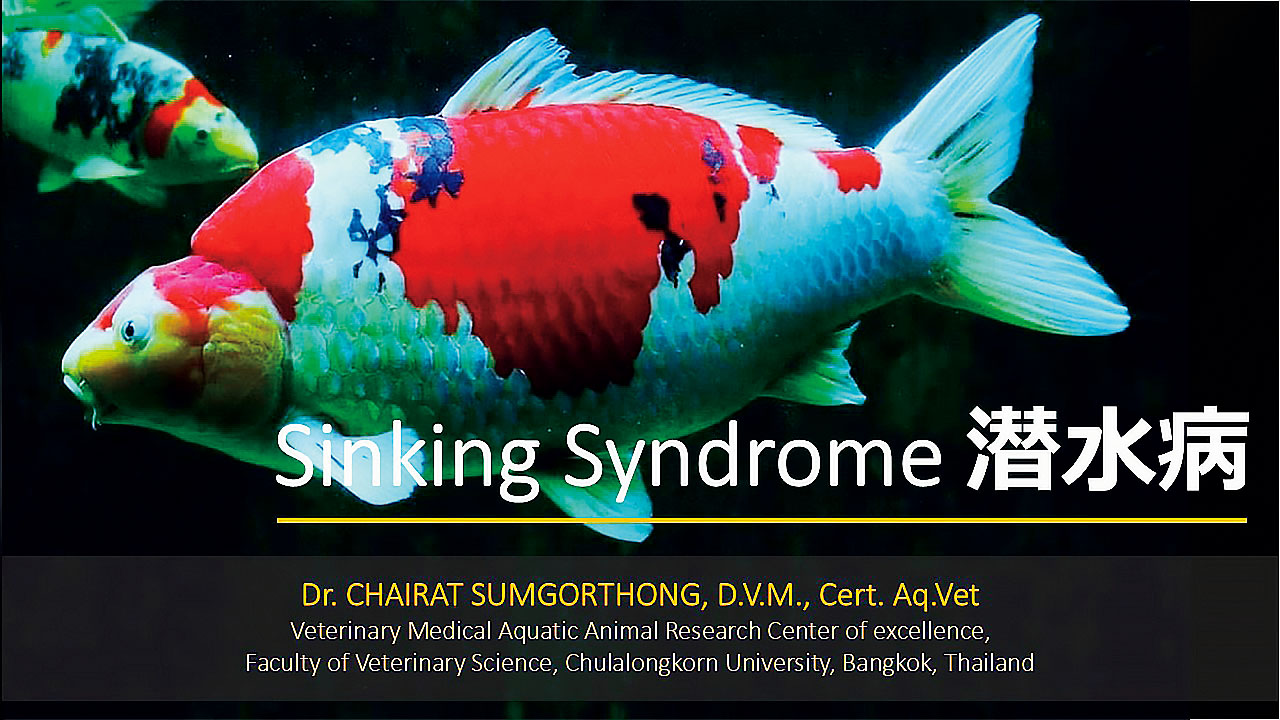
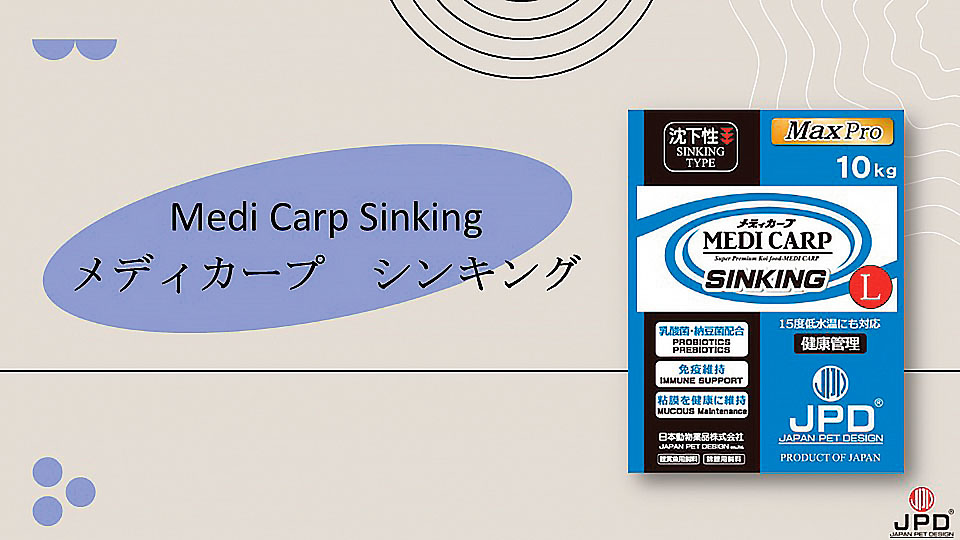
At our company, we are jointly developing a feed called “Medi Carp Sinking” to prevent Sinking Syndrome, in collaboration with a PhD researcher in Thailand who specialises in Sinking Syndrome. We have conducted trials overseas for approximately 2 years, and in Japan, we are continuing observations with the support of several hobbyists.
It is essentially like a supplement, so we recommend using it as a preventive measure. It is intended to promote a detox effect by helping to release gas that has accumulated within the koi’s body.
As for the feeding method, it should be given once a day, during the first feeding in the morning. After that, you can proceed with normal feeding, such as growth-promoting feed, and the koi’s lustre will gradually improve. If koi are not in good health, they will not feed properly, and their body lustre will not improve. For this reason, we recommend using Medi Carp Sinking as the first feed of the day.
Some people may get the impression from the name “Medi Carp” that it is a medicated feed; however, it is more like a supplement. Therefore, even if it is fed 100% every day throughout the year, it will not cause any negative effects on the koi’s condition.
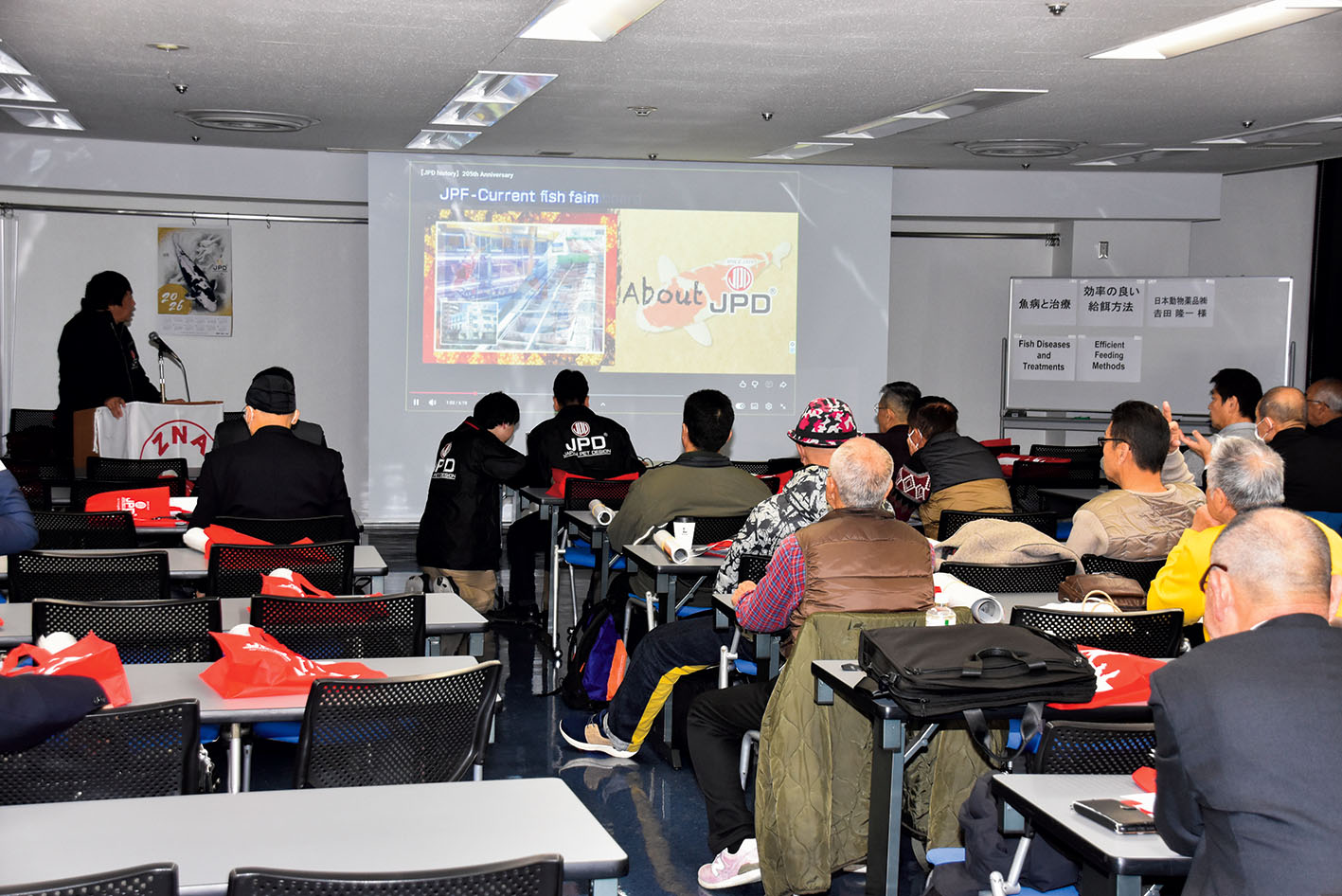
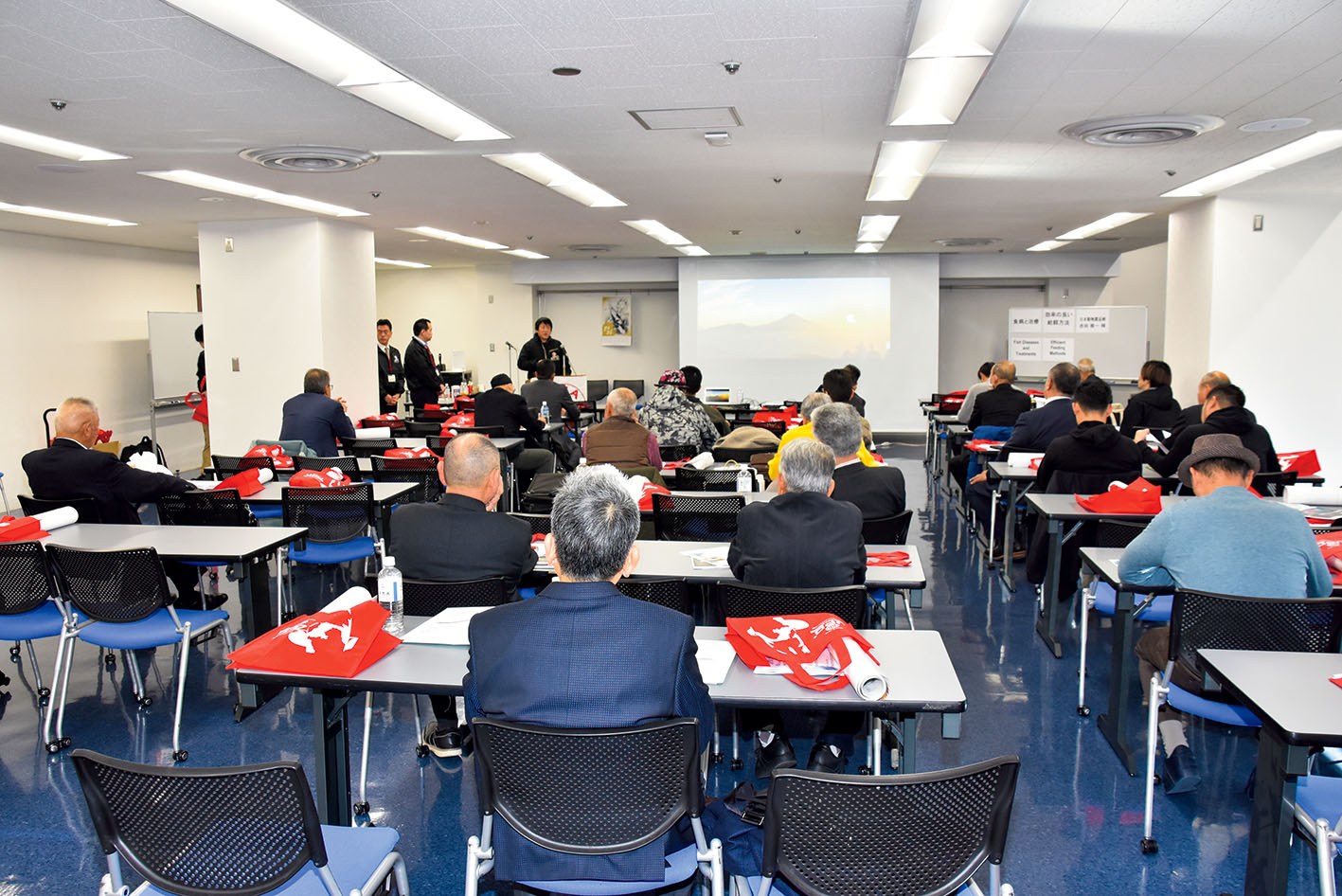
In closing, our company is dedicated to product development with the health of koi as our top priority, and we aim to help protect your cherished koi from disease. We will continue to make every effort to support you in matters related to fish health. Thank you very much for your continued support and for attending today’s seminar.