Typhoon No. 25 Brings Torrential Rain and Flooding to Chiba Prefecture
The Lake Inba Levee Breaches: The Damage and the Road to Recovery
On September 22, a national holiday, record-breaking rainfall brought by Typhoon No. 25 caused a series of levee breaches around Lake Inba (Inba-numa) in northwestern Chiba Prefecture, flooding a wide area. Nishikigoi producers and distributors in the prefecture were also hit hard, suffering severe losses of facilities, equipment and koi. Among them, Tani Fish Farm, located just 500 to 600 meters from Lake Inba, saw almost its entire grounds submerged. Some 100,000 fish were affected, and total damage has reached roughly 1 billion yen. As restoration work continues toward reopening and rebuilding the business, we report on the extent of the flood damage and the efforts to recover.
An Unprecedented Flood Strikes
a Koi Farm with 65 Years of History
In the early morning of September 22, record rainfall from Typhoon No. 25 caused levees to fail one after another in the Lake Inba basin around Narita City, Chiba Prefecture, leaving a wide area under water.
Lake Inba lies in northwestern Chiba Prefecture and is part of the Tone River system. It has long supported local life as a source of water for agriculture and household use. Because it flooded repeatedly during heavy rains, however, it was once known as “abare-numa”—the “rampaging marsh.”
Today the lake is divided into North Lake Inba (Kita-Inbanuma) and West Lake Inba (Nishi-Inbanuma), and is surrounded by flat lowlands. Its water level rises easily in heavy rain, and levees and drainage pumping stations have long protected the area from flooding.
This time, about 100 meters of levee gave way at North Lake Inba, and levees also failed along the Tsunogawa Catchment Channel and the Nagato River, both of which flow into Lake Inba. Roads, farmland and homes in the surrounding area were inundated, causing extensive damage.
Many producers and distributors in the prefecture were affected, with koi swept out of mud ponds when the levees broke. Of these, Tani Fish Farm, which boasts 65 years of history, suffered especially severe damage.
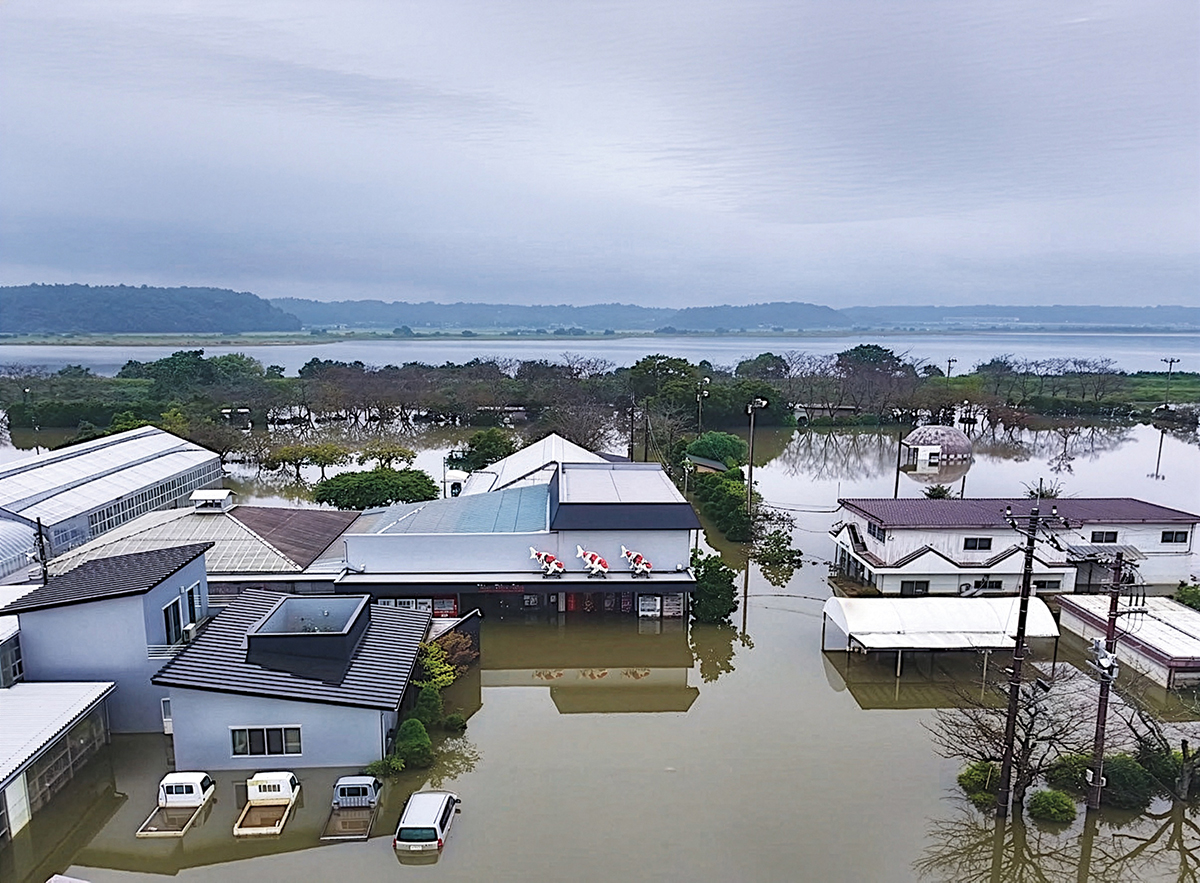
The farm sits on vast grounds of about 30 hectares—roughly six times the size of Tokyo Dome—with a sales facility, indoor ponds and mud ponds, as well as a fishing pond and a putting golf course. However, because it lies just 500 to 600 meters from the breached levee, nearly the entire property was covered in muddy water.
Damage at Tani Fish Farm
(Shitakata, Narita City, Chiba Prefecture)
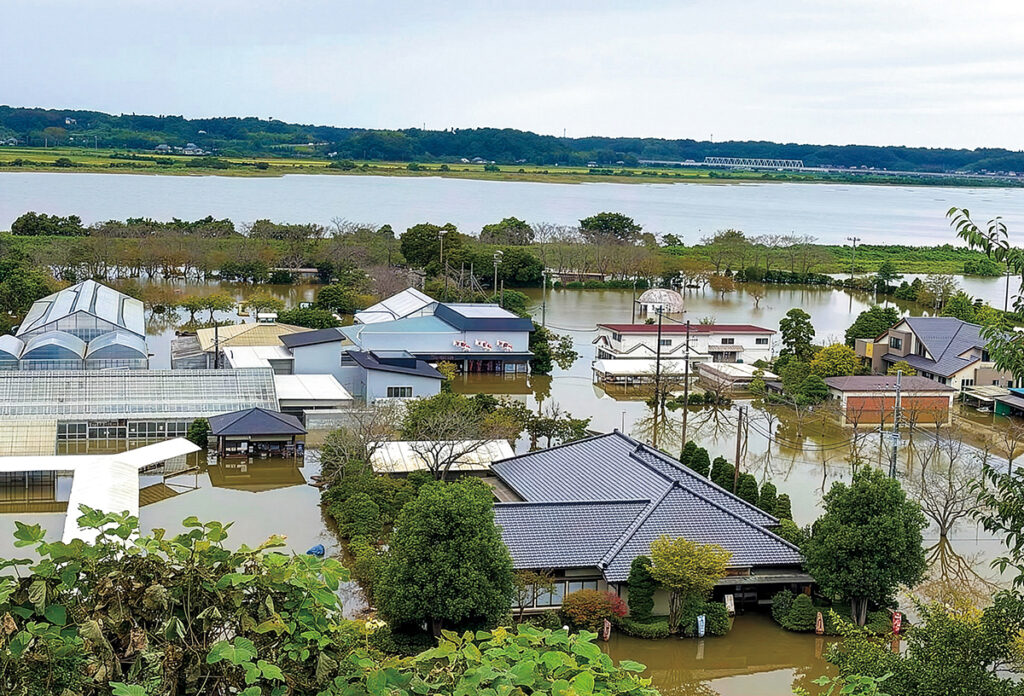
and a putting golf course in the right background. North Lake Inba can be seen in the distance.
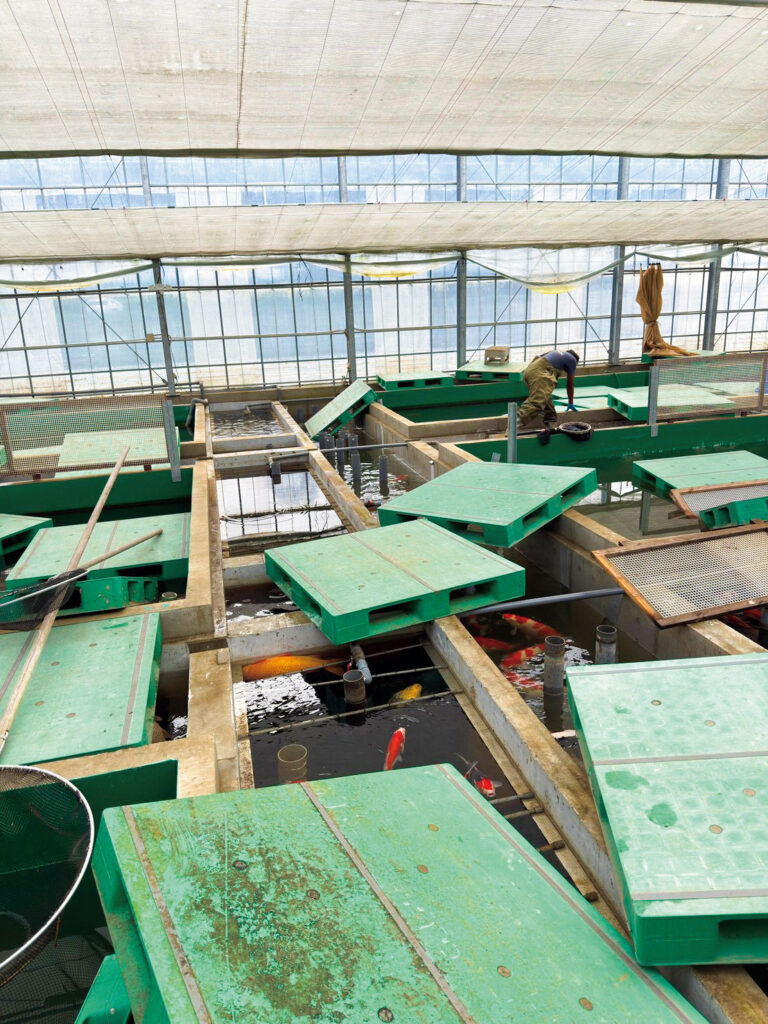
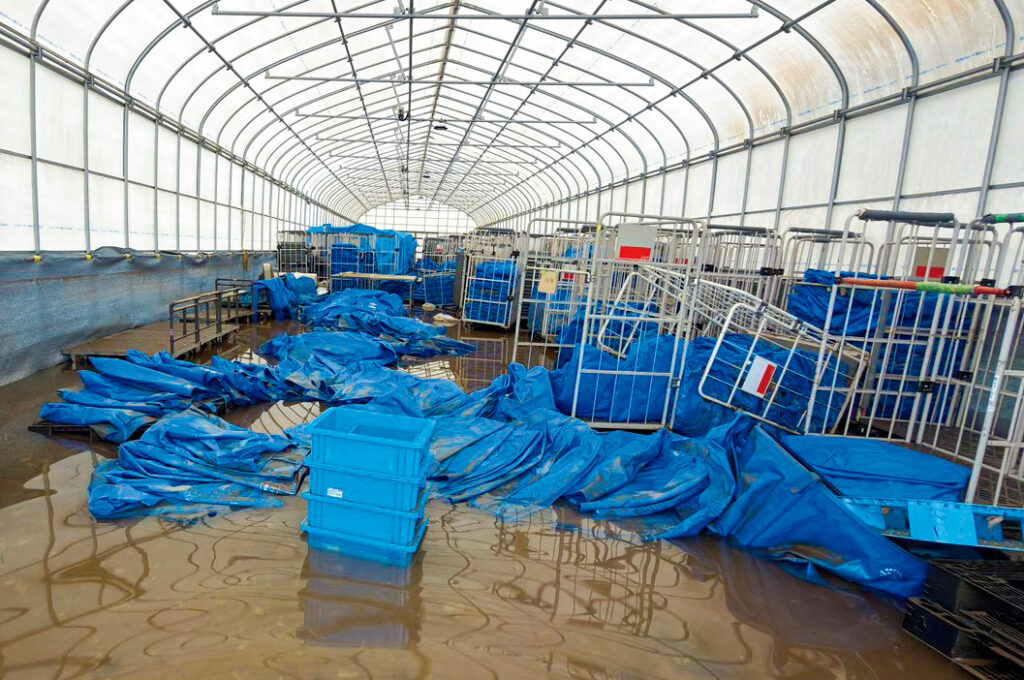
In the deepest spots the water reached 1.5 to 1.6 meters. Not only the indoor ponds and other facilities, but also the vehicles, heavy machinery, pumps, motors and all the other equipment essential to running the farm were submerged.
The farm had been keeping about 100,000 fish—mainly Nishikigoi, along with goldfish, medaka and river fish—and most of them were swept away, a devastating loss.
The farm has expanded its Nishikigoi production every year and boasts the largest output in the Kanto region. In this flood, however, it lost about 50,000 Tosai, about 30,000 koi aged two and older, more than 200 entrusted koi, and more than 200 parent koi indispensable for breeding. Coming just as the main Nishikigoi sales season was about to begin, the loss is enormous. According to Mr. Kenji Tani, head of the farm, damage including facilities and equipment is expected to reach about 1 billion yen.
The farm gathered koi from its own production and from breeders across Japan, serving as a sales hub visited by hobbyists and dealers not only from Japan but from overseas. The damage is therefore more than the loss of a single farm: it has dealt a heavy blow to the sales network and inventory built up over many years, and to future production plans.
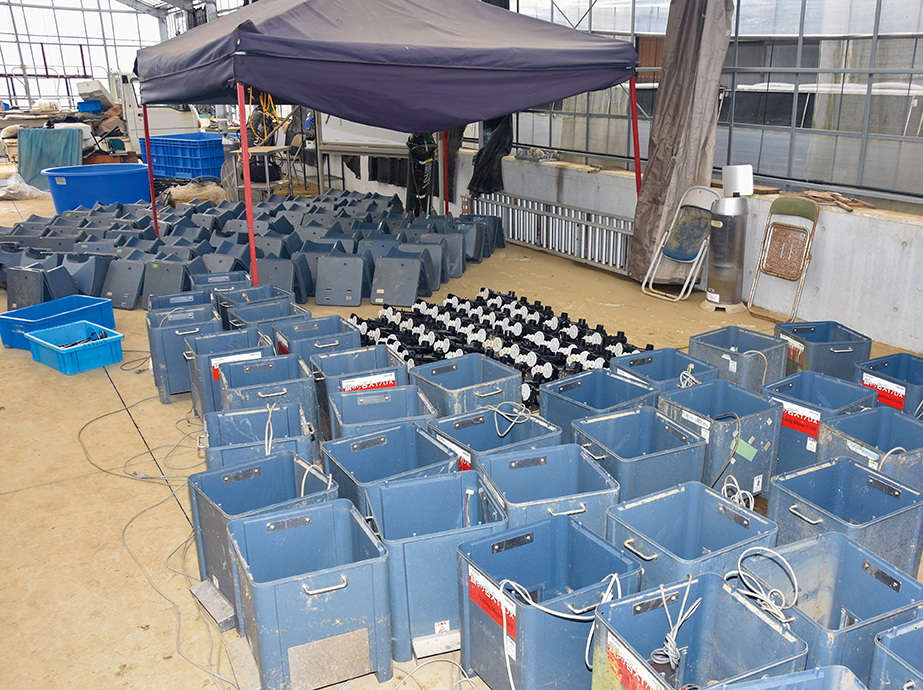
The farm also looks after the show vats and related equipment used at koi shows around the country, including the All Japan Nishikigoi Show and other national and regional shows. All of these were flooded as well, so the damage extends to the Nishikigoi industry as a whole.
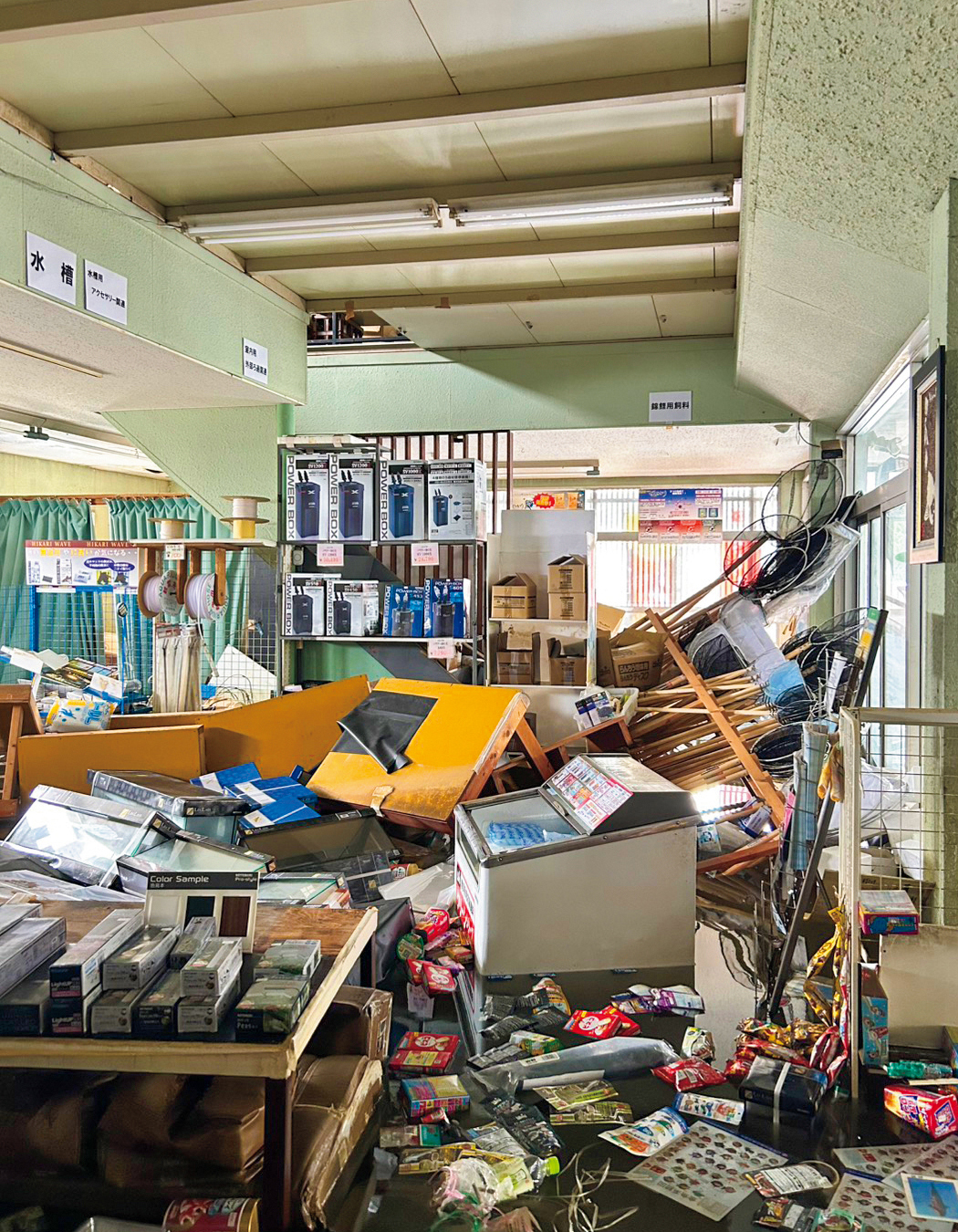
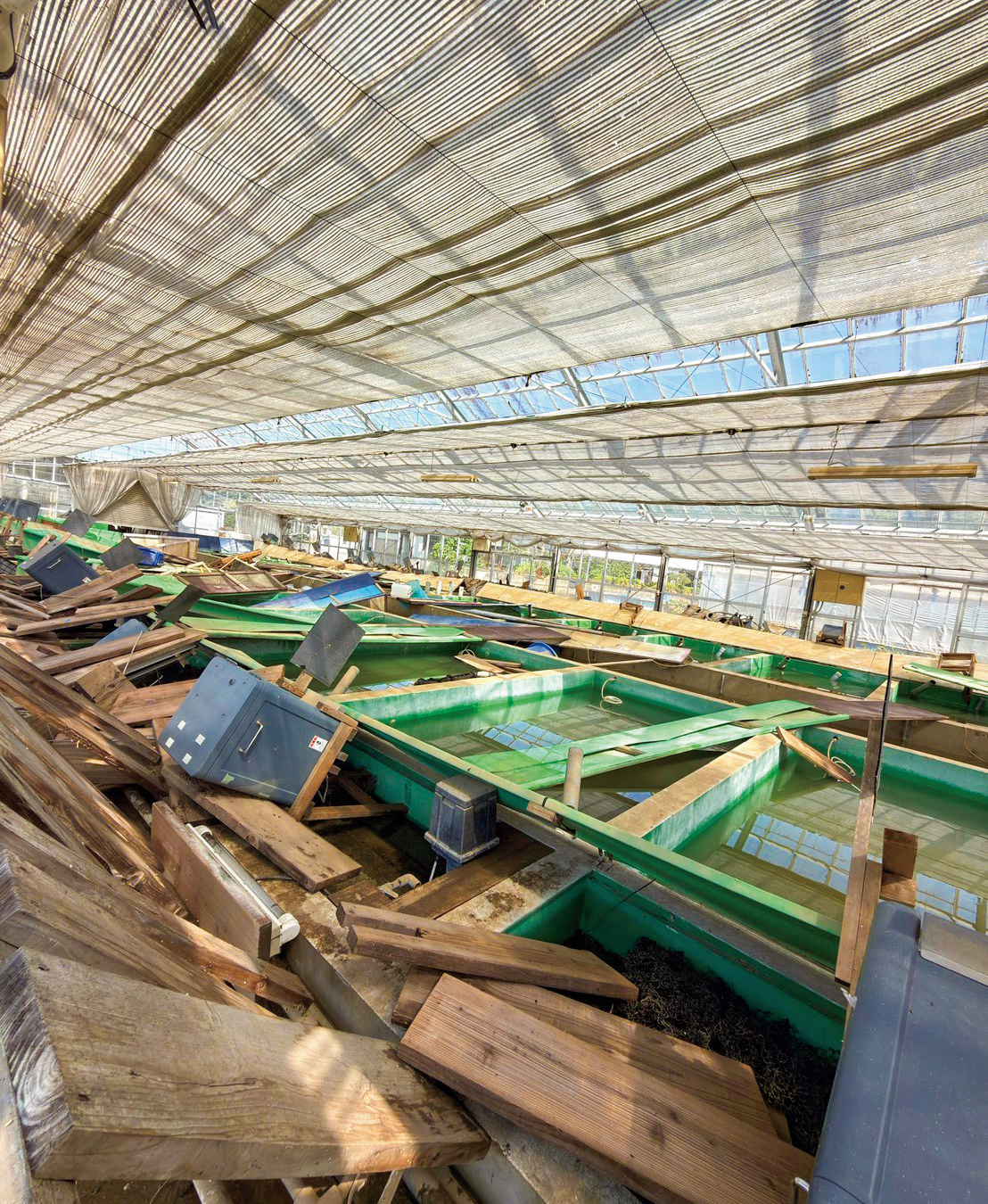
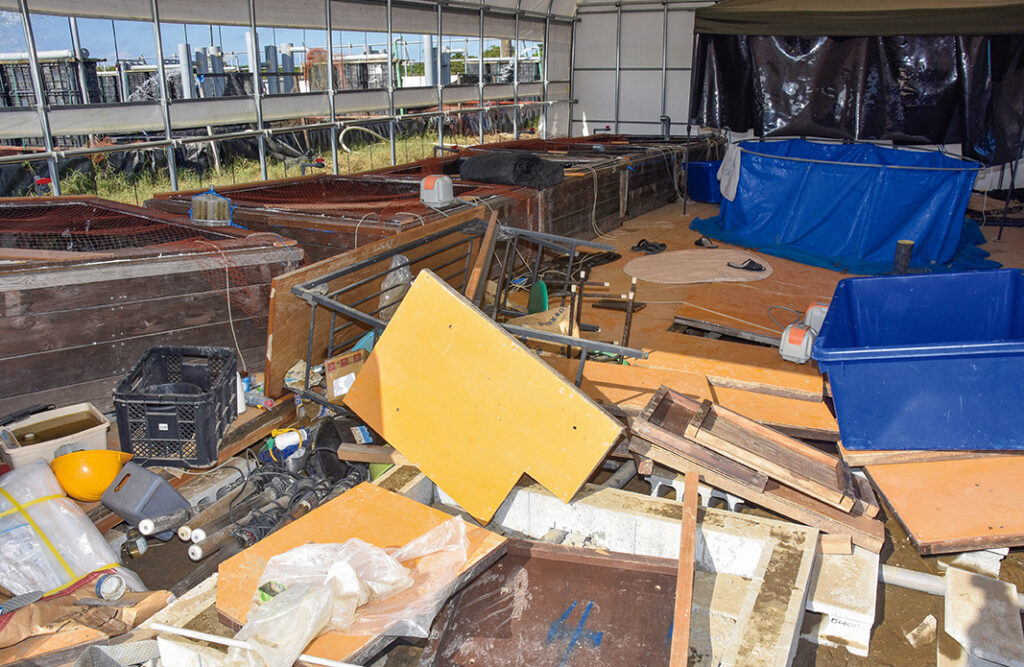
materials scattered by the flooding
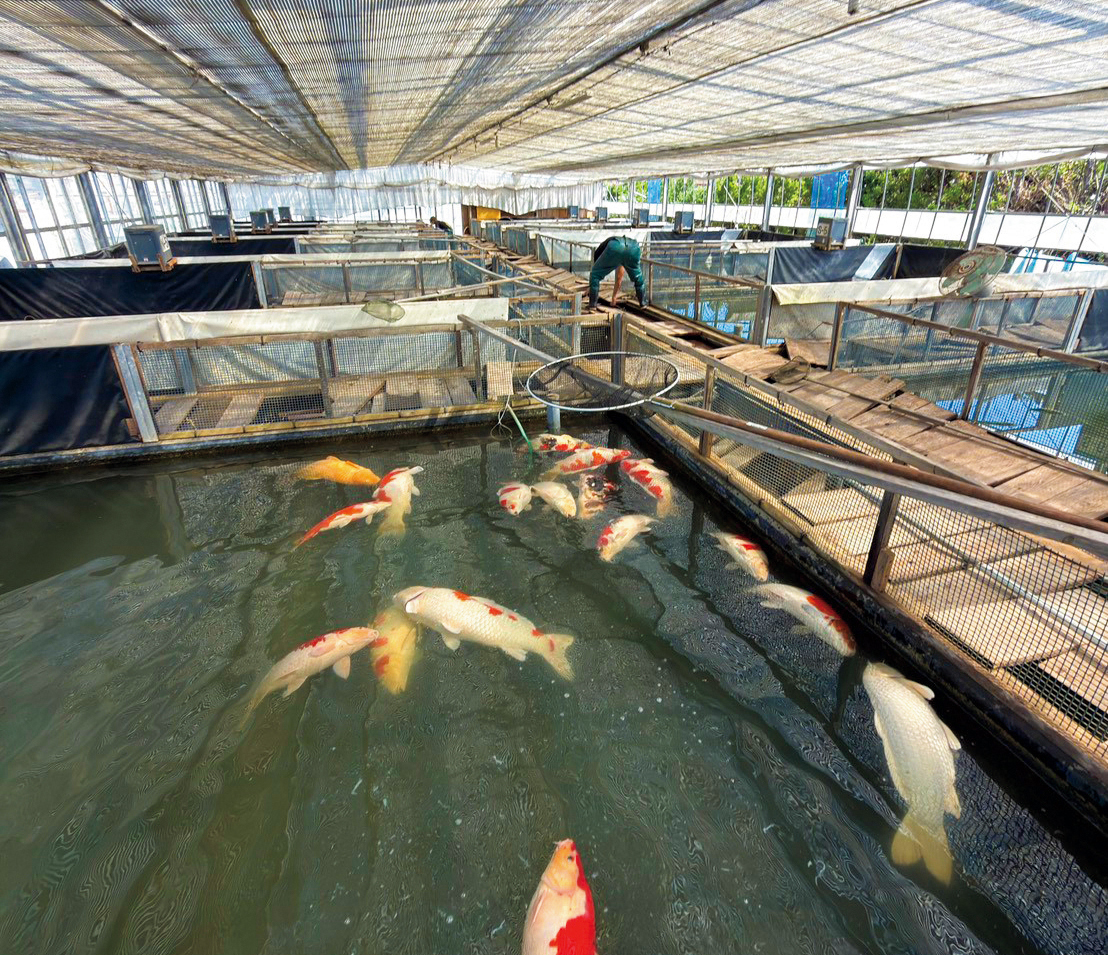
a power outage
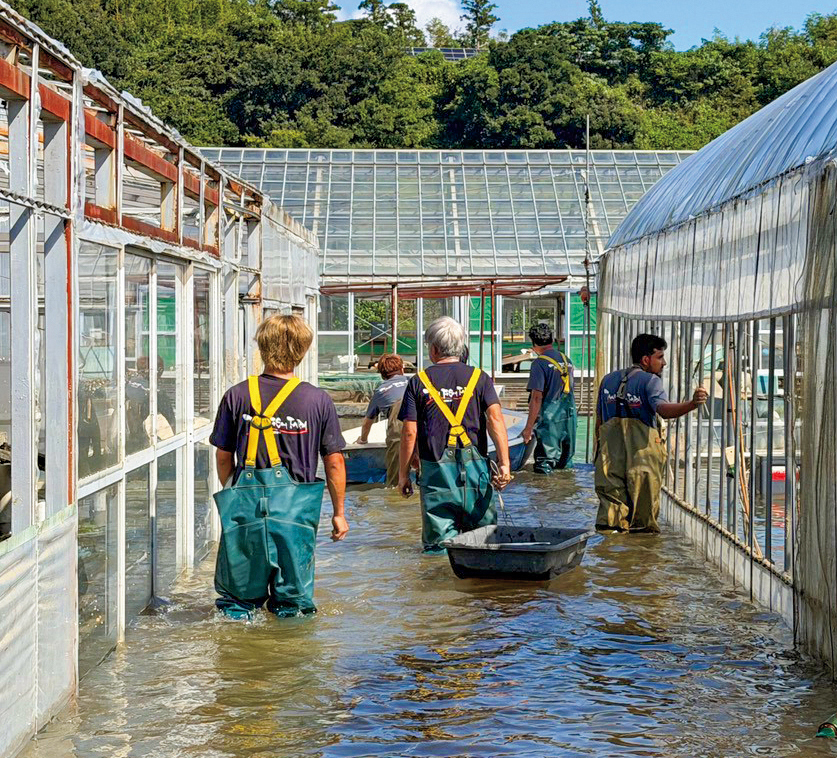
Three Days for the Water to Recede
Volunteers Come Out in Force
Immediately after the Lake Inba levees broke, huge volumes of muddy water poured onto the grounds of Tani Fish Farm, making it difficult even to approach the facilities over land. It took about three days for the floodwaters to drain. Only on Friday, September 25, did the water finally begin to recede, gradually revealing the full extent of the damage left on the property.
What emerged as the water receded were facilities covered in mud and debris, and machinery and equipment rendered unusable by the flooding.
As for the fish that had been swept away, the water had spread over such a wide area that recovering them proved extremely difficult.
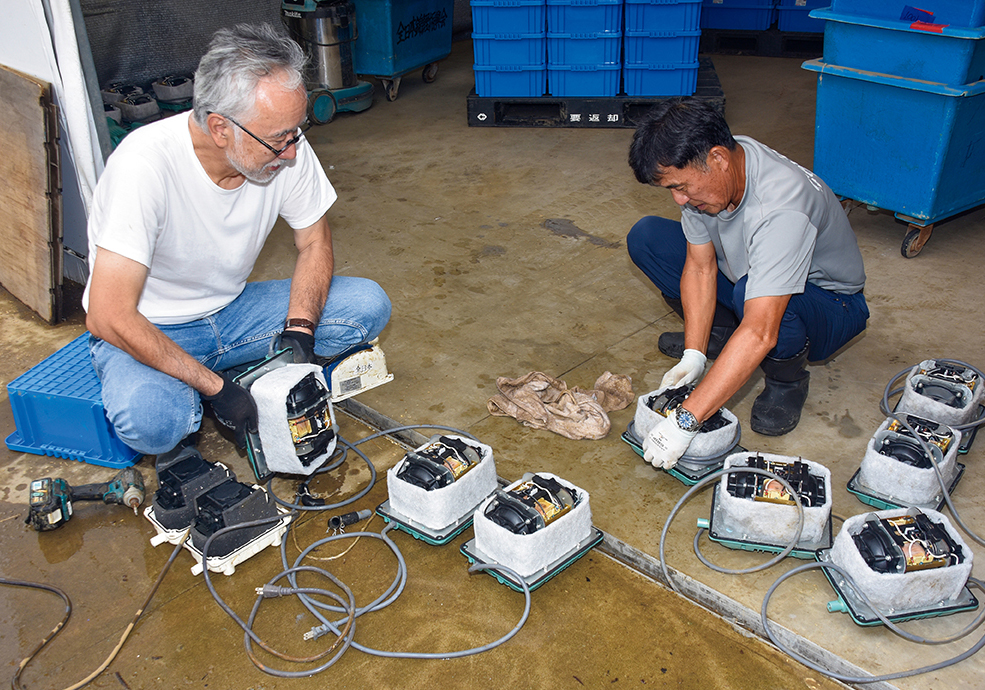
Amid this devastation, the farm’s recovery has been supported by its staff, people connected to the farm, and a great many volunteers. Over the weekend of September 26 and 27, more than 100 volunteers came to the site and worked alongside the staff, carrying out damaged goods and materials and cleaning up the facilities.
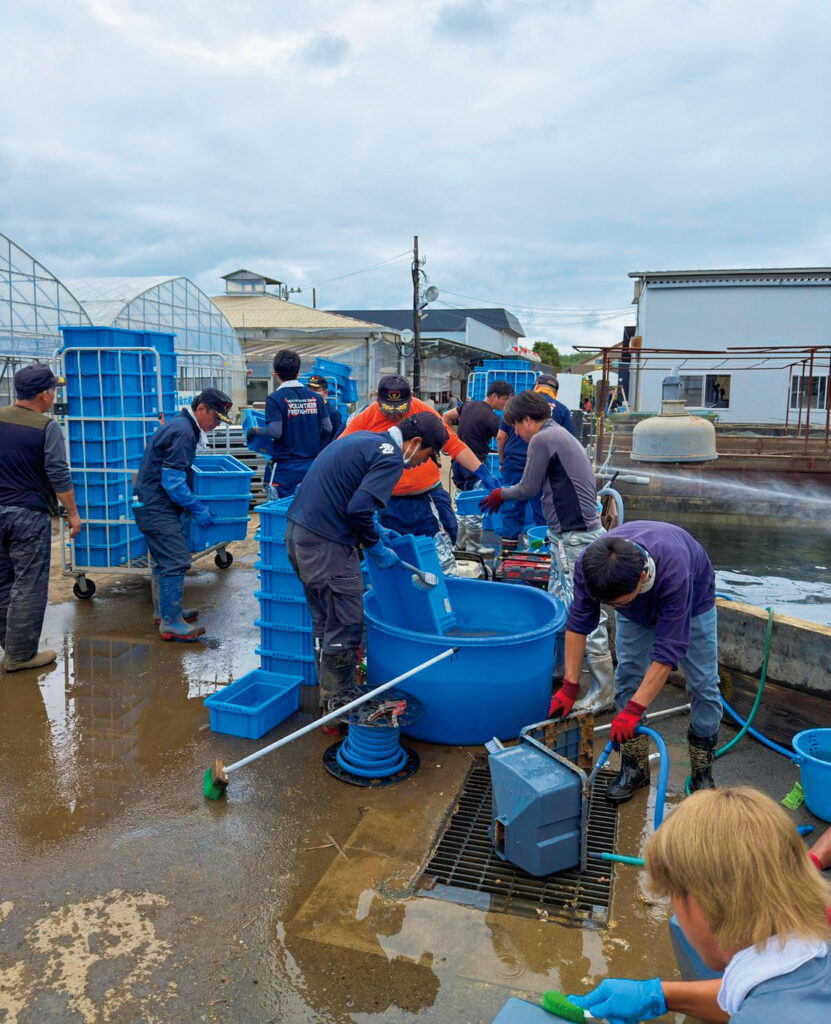
Nishikigoi Promotion Association
In the surrounding area, the national government, Chiba Prefecture and other authorities moved quickly with restoration work, draining the area around Lake Inba and carrying out emergency repairs to the levees. At the breaches, emergency closure work proceeded using pump trucks for drainage, large sandbags and waterproof sheeting. On Wednesday, September 30, temporary closures were completed at the breaches on the Tsunogawa Catchment Channel and the Nagato River, and restoration of the surrounding area is progressing step by step.
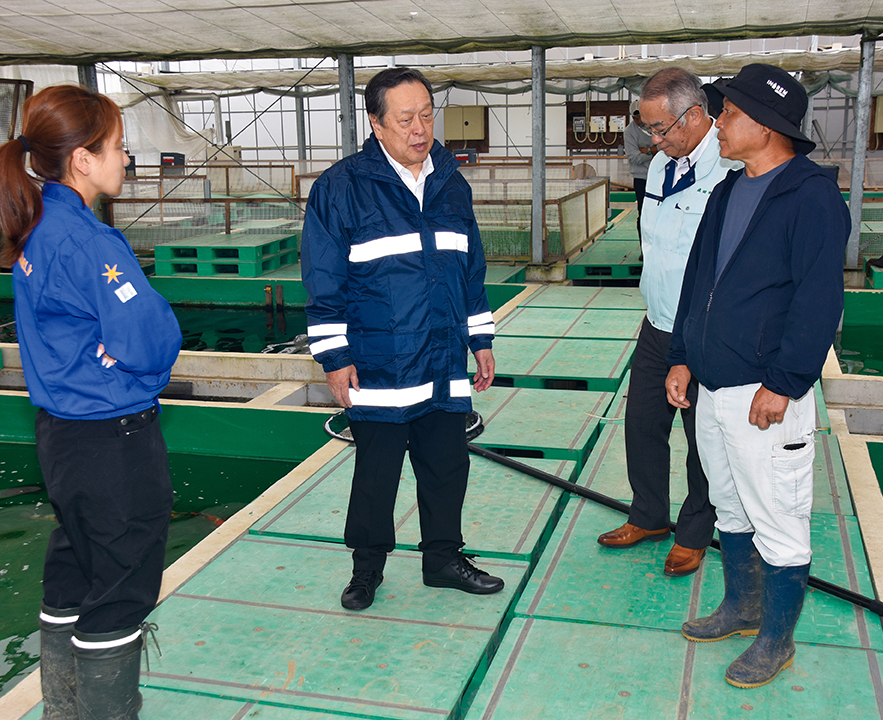
On Friday, October 2, Mr. Yasukazu Hamada, a member of the House of Representatives and chairman of the Parliamentary League for the Promotion of Nishikigoi Culture and Industry, and Mr. Shinji Fukushima, Deputy Mayor of Narita, visited Tani Fish Farm together with officials from the Fisheries Agency and Chiba Prefecture to inspect the damage. They examined the flood-damaged facilities and equipment and exchanged views on the path to recovery and reconstruction.
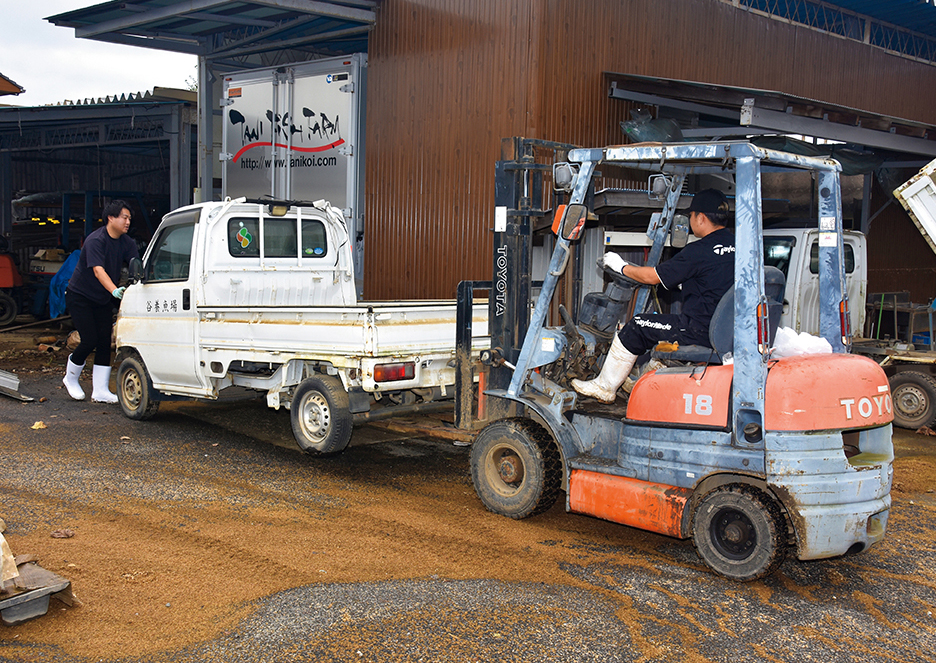
A temporary storage site for disaster waste from Narita City was set up in one corner of the farm’s grounds. With electricity and well water restored within a few days, cleanup of the property was about 80% complete just 10 days after the disaster. Given the scale of the damage, recovery has arguably only just begun, but thanks to the many people supporting the farm, it is gradually moving forward.
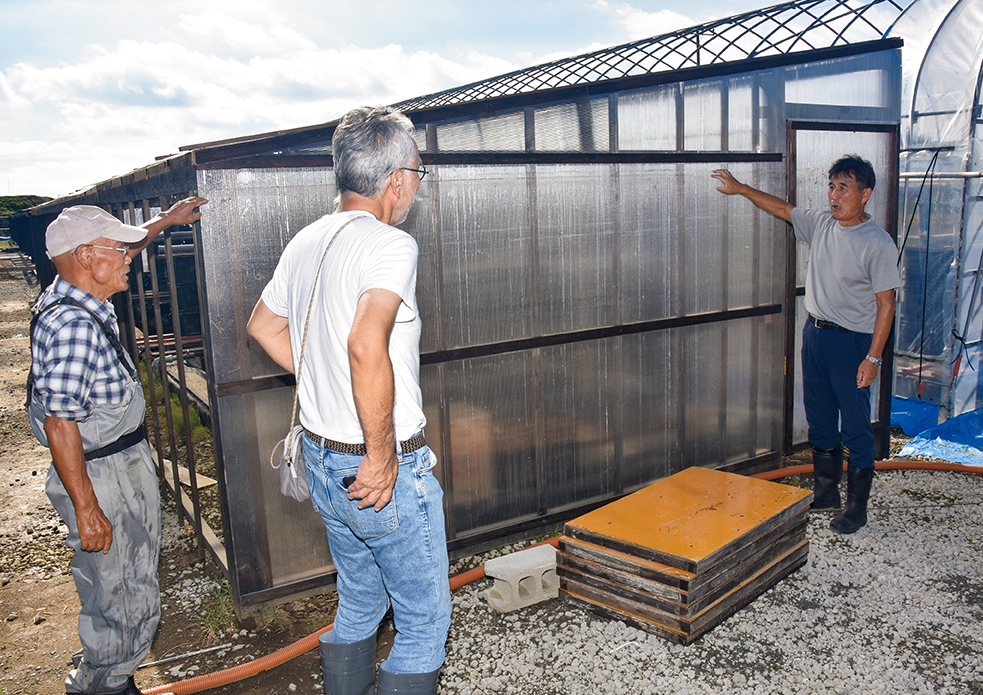
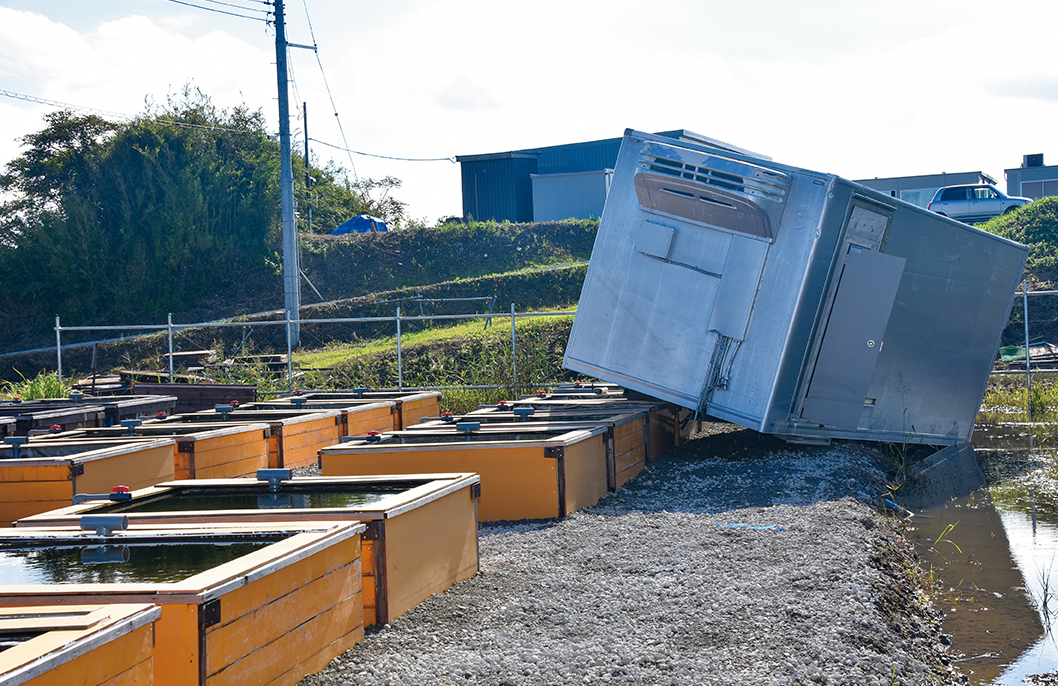
Damage at Miyoshiike Chiba Branch
(Kitasuka, Narita City, Chiba Prefecture)
Aiming for an Early Reopening
Restoration of Facilities Underway
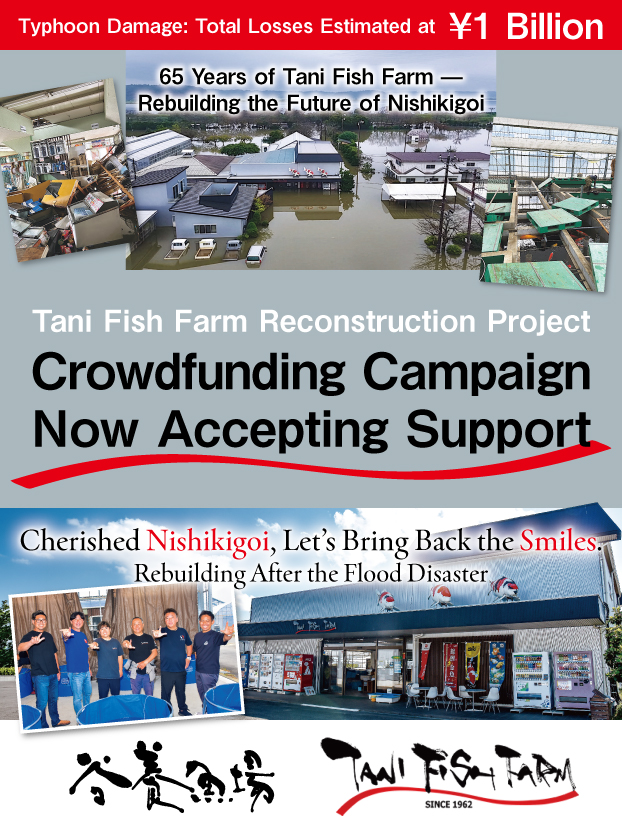
According to Mr. Tani, fully restoring the facilities and equipment, including repairing and replacing machinery, is expected to take about three months. Staff and others connected to Tani Fish Farm are now working hard on restoration, aiming to reopen as soon as possible and rebuild the business. The farm is also working to secure koi to replace its lost sales stock, as well as parent koi for next year’s breeding, and a crowdfunding campaign seeking supporters for its recovery will begin on Thursday, October 15.
To ensure that the 65-year legacy of Tani Fish Farm does not end here, broad support will continue to be needed for its swift recovery and reopening.
In addition, part of the proceeds from the Nishikigoi auction (Sunday, December 6, from 1 p.m.) at the 54th Kanto-Koshin Regional Nishikigoi Show—to be held December 5–6 at the Fountain Plaza in Ueno Onshi Park—will be donated to relief for the Chiba Prefecture flood. Organizers hope as many people as possible will take part.