Narita Koi Farm’s Niigata Project
Over 540 Tons of Water in 43 Ponds
State-of-the-Art Facility Set for Full Operation This Fall
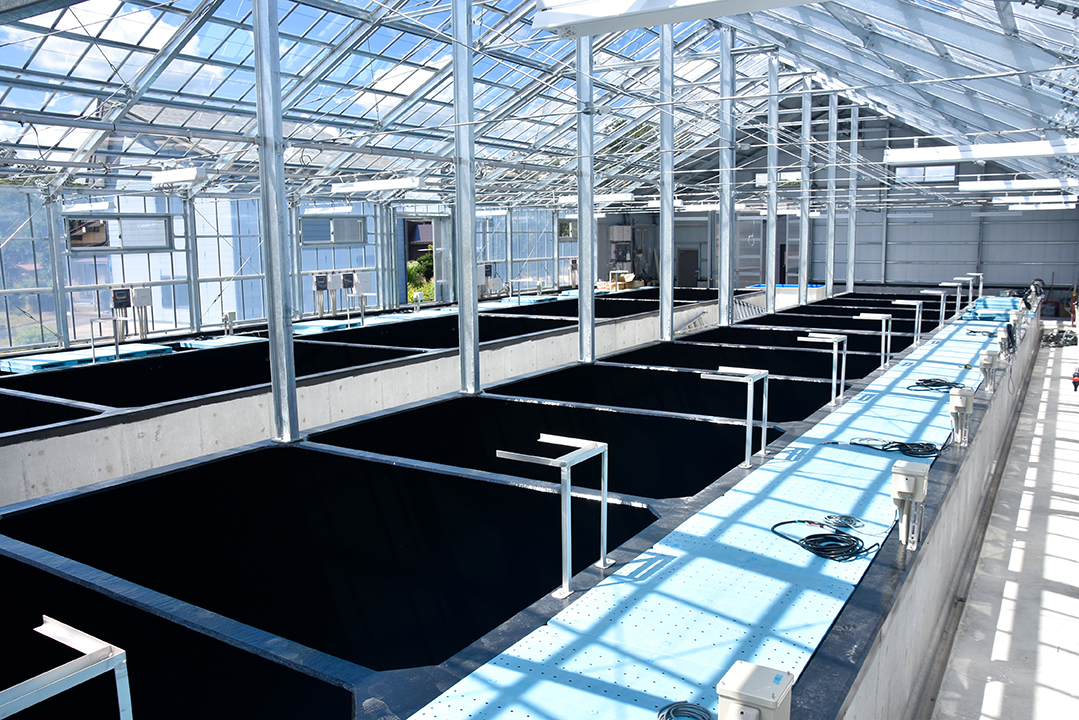
Under the banner of the “Niigata Project,” Narita Koi Farm Co., Ltd. of Komaki City, Aichi Prefecture, has been building a new facility on a site of about 800 tsubo (about 2,600 m²) in Ogawara-machi, Nagaoka City, Niigata Prefecture, and the project is now in its final stage ahead of full operation at the end of September. The facility has two indoor pond buildings housing twenty-eight 5-ton ponds, ten 15-ton ponds and five 25-ton ponds, along with a warehouse and living quarters. Narita Koi Farm, whose koi keeping has been described as “the best in the world,” has built its long-cultivated know-how into every corner of the facility. With thorough management and measures against trouble, it is a concentration of the experience and attention to detail that Mr. Ryuki Narita has built up over nearly 35 years with Nishikigoi. An opening event is also planned for October 31, and the facility is drawing attention as a new base for showcasing what Narita Koi Farm has to offer. We asked Mr. Narita about the progress of the facility, the thinking behind its equipment, and the role the Niigata store will play.
― About a year has passed since you announced the construction of large-scale indoor ponds in Niigata. How is the progress as of today (August 27)?
Narita: The four buildings—two indoor pond buildings, the warehouse and the living quarters—are up. With full operation set for the end of September, all our staff are working together to put in filter media and do the detailed plumbing. It’s about 80% complete.
― You’ve worked with indoor ponds for many years and are known for concrete pond keeping, but this is your first challenge in snow country. Has anything been different?
Narita: I built the indoor ponds while asking local people in Niigata for advice. For example, I was told that glass on the sides of the building can break under the pressure of snow, so we used agricultural film, which has excellent transparency and durability. Normally the film is doubled to improve heat retention, but that lets in less light, so we used a single layer. Even if fuel costs go up, we designed it to put making the koi beautiful first.
― Especially since winter in Niigata has so few hours of sunlight.
Narita: Light is extremely important for koi, so we used glass for the roof instead of corrugated panels, to let in as much light as possible. Corrugated panels and film may be fine the first year, but after two or three years they inevitably turn cloudy, and the koi will definitely turn out worse. Glass also simply looks better.
― As you’d expect in snow country, there are snow-melting ponds beside the indoor pond buildings and the warehouse.
Narita: Yes. The warehouse’s snow-melting pond is separate, but we plan to make the ones by the indoor pond buildings usable as koi ponds in summer—two 30-ton ponds and two 50-ton ponds.