Takuro Nishikigoi Seminar / Lecturer: Takuro Ogiku (Yokohama Nishikigoi)
Tracking the Changes of Minuma Goshiki
This is the Nishikigoi seminar “Minuma Goshiki Edition” held in October 2025. In this session, we will study the change process of Minuma-san’s Goshiki, using koi sold at our shop as examples. On the day, President Kenichi Wada also visited us and explained the key points when selecting Goshiki. (Ogiku)

Ogiku: Mr. Wada is the second generation, and during his father’s time, they mainly handled Showa and were distributors rather than producers. Since it became Ken-chan’s (Kenichi Wada’s) generation, they started production in earnest, and the main focus became Goshiki. Since then, it has long been their signature koi, and now he has become a producer drawing so much attention that people say “Goshiki means Minuma, and Minuma means Goshiki.” He is working hard on production hand-in-hand with his younger brother, Riki-san. I heard they produced good koi this year too, so I hope everyone will wait looking forward to it.
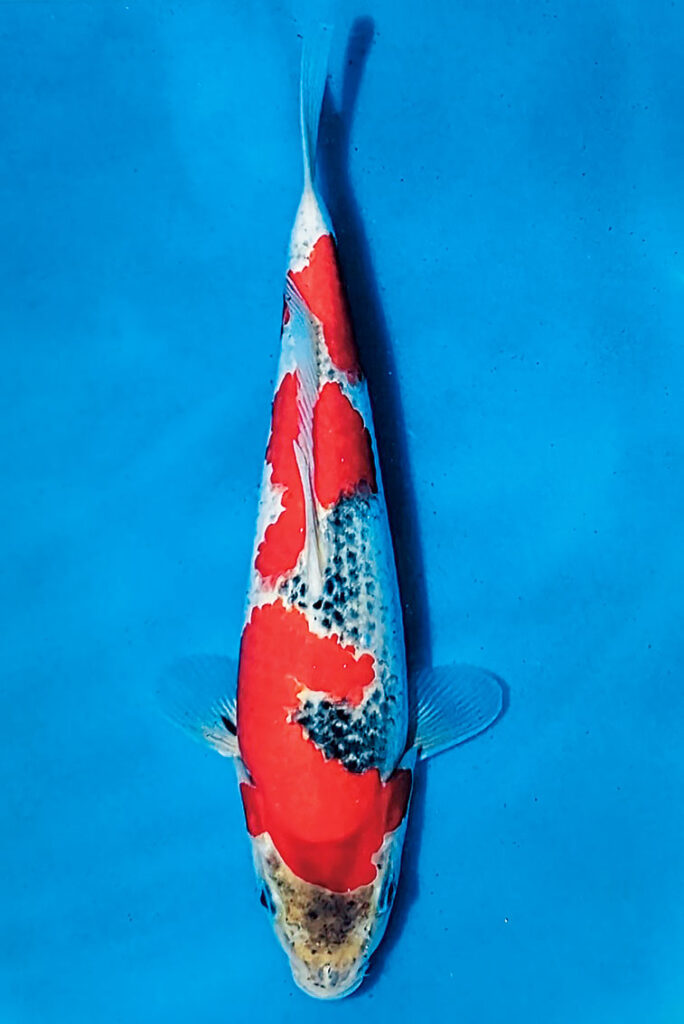
First, the first koi is a Tosai, its appearance in the spring (①-A). When it was harvested in the autumn of the previous year, it looked like a Kohaku, and the ground body had hardly come out yet. This is a koi that was kept in a concrete tank over one winter, and I went to buy and had it spared for me in the spring. Though it is not that dark yet, the Goshiki body color is showing.
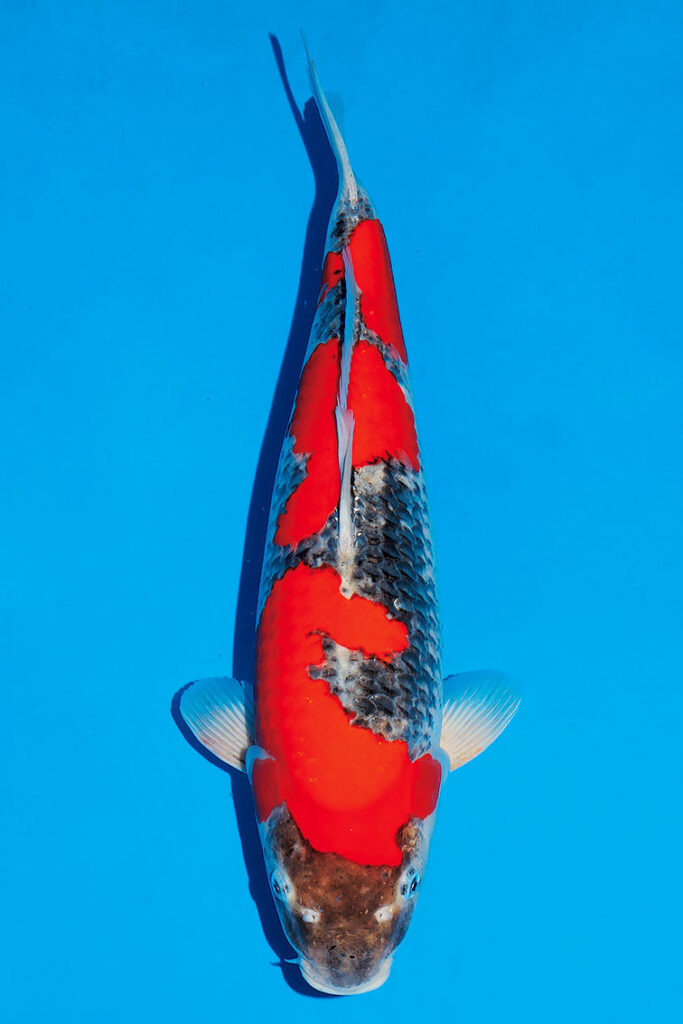
When this koi was raised for two years, it looked like this at age three (①‑B). It has changed a lot, but it is the same koi. The gray body color has appeared overall.
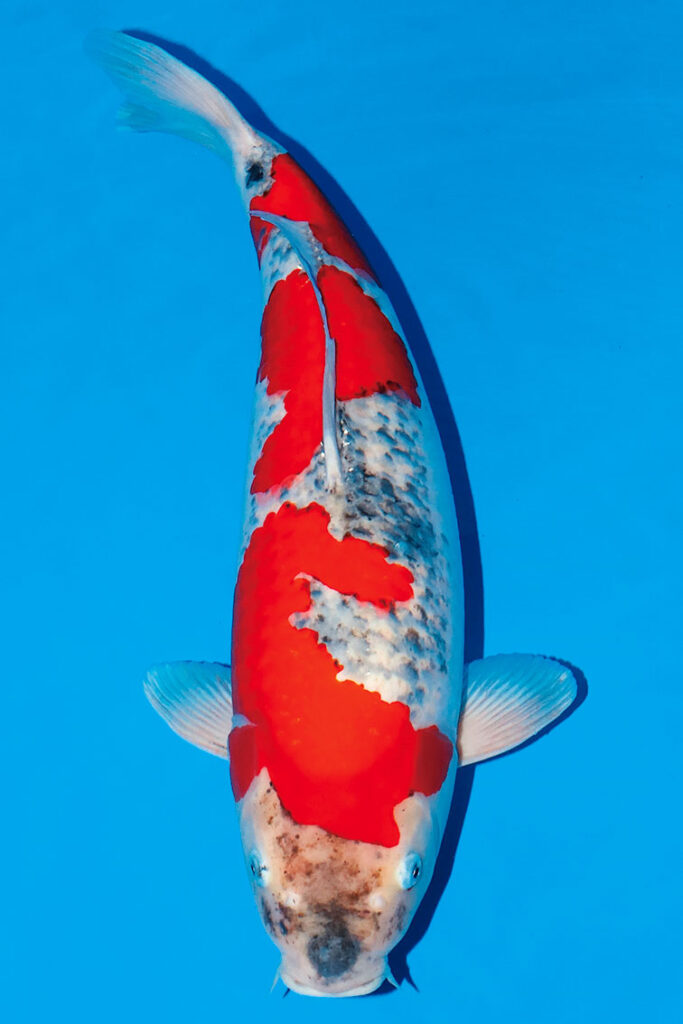
Then, after another year raised in a wild pond, here it is at age four (①-C). Because it has just been harvested from the wild pond, the body color has faded a bit. When placed in a wild pond, it tends to become whitish. As you can see, the body color of Goshiki changes considerably depending on the environment. I think Ken-san knows this well, but it is said that if you keep Goshiki in a tataki pond, the body color will appear even if you do nothing special.
I think the koi ① will become a Goshiki of a refined category, where the Hi has the fluorescent crimson unique to Goshiki and is not dirtied blackish… Probably Mr. Wada was the very first to be able to fix this characteristic. In the past, there were many where Koromo-like indigo blew on the red, but now it is considered that having no dirt on the Hi plate has more value, and this type is becoming the mainstream. I think Mr. Wada struggled quite a bit to fix this.